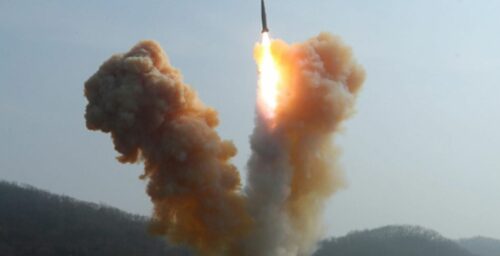
Ukrainian Officials Report First Use of North Korean Missile in Russian Assault
North Korean missile in Ukraine — In a notable escalation of the ongoing conflict, Ukrainian officials announced that Russia has deployed a North Korean ballistic missile in a recent attack against Ukraine. This incident, which resulted in multiple casualties, including the tragic loss of children’s lives, marks the first documented use of such weaponry since 2025. The development highlights the increasingly close military ties between Moscow and Pyongyang, as both nations grapple with international isolation and economic pressures.
The missile strike occurred shortly after Ukrainian authorities issued warnings about a new wave of deployments involving North Korean troops and ballistic missile launchers being transferred to Russia. This alarming intelligence suggests a strategic partnership that could significantly enhance Russia’s military capabilities at a time when it faces mounting challenges from Western sanctions and military assistance to Ukraine. Such cooperation between Russia and North Korea underscores the shifting dynamics in the region, with both countries seeking to bolster their military might in the face of international scrutiny.
Ukrainian officials confirmed that the ballistic missile was launched from Russian territory, marking a critical shift in the conflict’s dynamics. This development raises concerns about the potential for further escalation, as Russia appears to be diversifying its sources of military technology amid increasing isolation from Western nations. The North Korean regime, under the leadership of Kim Jong-un, has long been subject to international sanctions and isolation, making this partnership with Russia particularly noteworthy. The implications of this collaboration extend beyond immediate military engagements, raising questions about the proliferation of military technology and arms in an already volatile region.
Military analysts suggest that this alliance could embolden both Russia and North Korea, allowing the former to gain access to advanced military technology while providing the latter with essential economic support. The transfer of North Korean missile technology to Russia may not only enhance the operational capabilities of Russian forces but also create a new axis of military cooperation that could shift the balance of power in Eastern Europe and beyond. Furthermore, the use of North Korean missiles could provoke a stronger response from Ukraine and its allies, who have remained vigilant against any escalatory actions that threaten regional stability.
In response to the missile strike, Ukrainian officials have heightened their state of alert, closely monitoring troop movements and potential arms transfers that could further complicate the already precarious situation in Eastern Europe. The international community is expected to react with renewed calls for diplomatic interventions and an increase in sanctions targeting both Russia and North Korea. This incident underscores the urgent need for a coordinated response to the evolving security landscape, which is increasingly characterized by unconventional alliances and military escalations.
The ramifications of this development extend beyond the immediate battlefield. Should the collaboration between Russia and North Korea deepen, it could lead to a reconfiguration of military strategies not only in Ukraine but across the broader region. Countries in Eastern Europe, already wary of Russian aggression, may find themselves compelled to reassess their defense postures in light of this new alliance. As the situation unfolds, the potential for further escalation remains a pressing concern for Ukraine and its allies, who are committed to countering any threats that arise from this troubling partnership.