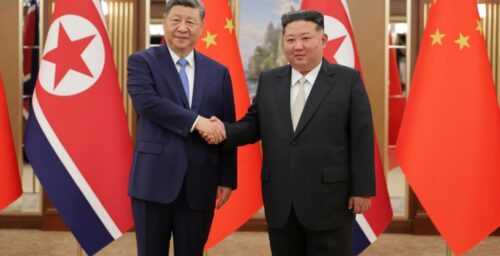
North Korea’s Trade Expansion Highlights Growing Dependence on China
North Korea trade China — In 2025, North Korea marked a significant increase in its foreign trade, revealing a deepening reliance on its primary trading partner, China. This trend is detailed in a recent report from South Korea’s Korea Trade-Investment Promotion Agency (KOTRA), which underscores Pyongyang’s strategy of concentrating its trade activities within Asia while still maintaining some level of engagement with nations in Europe and Africa.
The KOTRA report, published on Tuesday, indicates that North Korea’s overall trade volume has rebounded, reflecting a recovery from the stringent economic sanctions and international isolation that have characterized its recent history. The report notes that trade between North Korea and China is nearing record levels, highlighting how Beijing’s role as Pyongyang’s main trading partner has grown even more critical. This increasing dependency raises questions about North Korea’s economic sovereignty and its alignment with Chinese interests, which could have broader implications for the region.
In examining the trade data for 2025, it is evident that North Korea has exported a variety of goods, including minerals and agricultural products. Conversely, the country has turned to China for essential imports, such as food and fuel, which are vital for sustaining its economy. The report reveals that approximately 90% of North Korea’s total trade is conducted with China, a figure that starkly illustrates the depth of their economic interconnection. Such reliance on a single trading partner could render North Korea increasingly vulnerable to fluctuations in the Chinese economy and shifts in Beijing’s foreign policy, particularly as the Chinese government continues to exert significant influence over its neighboring state.
Despite its heavy reliance on China, North Korea has also made efforts to diversify its trade relationships by maintaining connections with countries in Europe and Africa. These initiatives appear to be a strategic attempt to mitigate the impact of the international sanctions that have been imposed due to its nuclear weapons program. While the volume of trade with these regions remains relatively minor compared to that with China, such efforts signify Pyongyang’s desire to broaden its economic partnerships and reduce its dependence on a single country.
The implications of North Korea’s growing trade with China extend beyond economic considerations and have significant ramifications for regional stability. As North Korea deepens its economic ties with Beijing, it may become more aligned with China’s geopolitical objectives. This alignment could potentially alter the balance of power in Northeast Asia, a region already marked by complex dynamics and ongoing tensions. The United States and its allies are particularly attentive to these developments, closely monitoring North Korea’s activities as they seek to navigate the challenges posed by a more economically integrated North Korea under Chinese influence.
The evolving trade landscape highlights the intricate interplay of economics and politics in the region. North Korea’s increasing dependence on China may not only shape its domestic policies but could also influence its interactions with other nations, including South Korea, Japan, and the United States. As these countries grapple with the implications of North Korea’s trade strategies, the potential for shifts in diplomatic relations and security arrangements remains a pressing concern.
In summary, North Korea’s trade expansion in 2025, particularly its growing reliance on China, reflects a strategic pivot that could have lasting implications for the region. As Pyongyang continues to navigate its economic relationships, the interplay of trade and geopolitical interests will remain a critical factor in shaping the future of Northeast Asia.