Confronting the Dual Threat of Corruption and Gang Violence in Ecuador’s Drug War
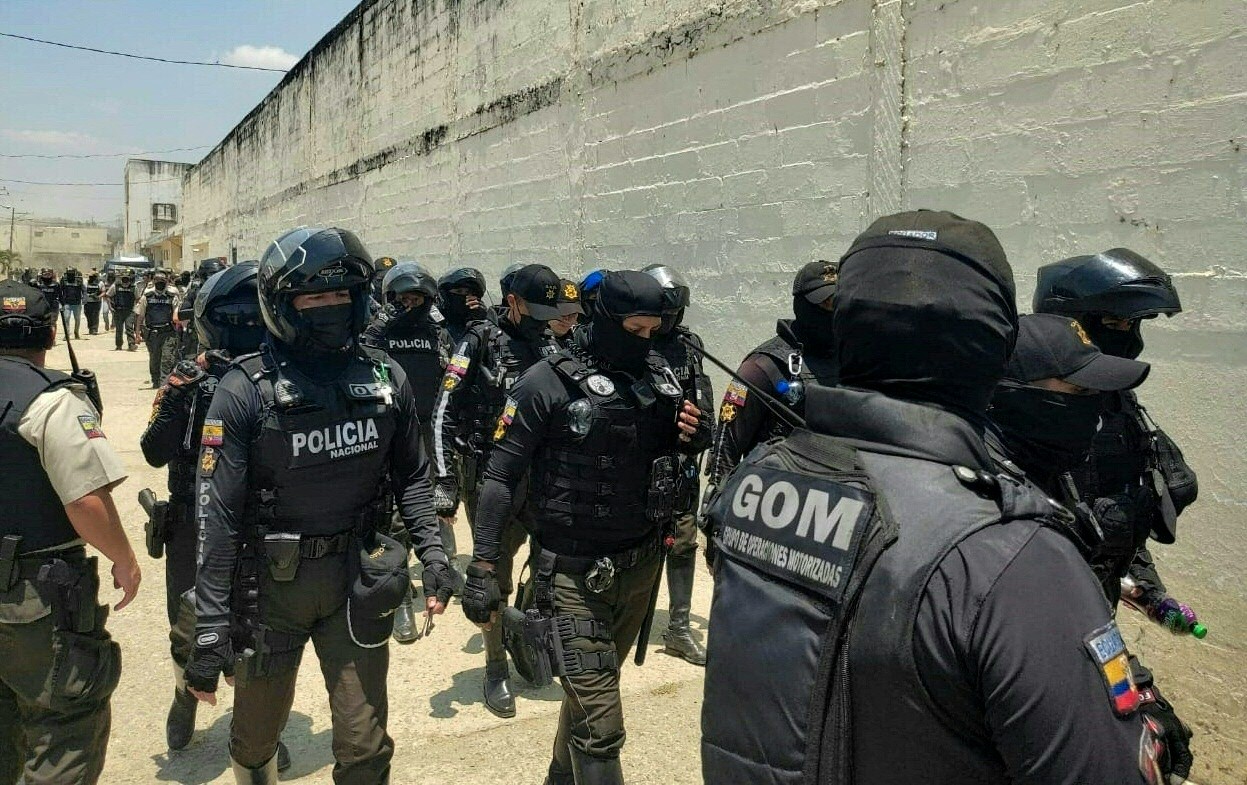
Ecuador drug war — The ongoing drug war in Ecuador has escalated into a complex crisis characterized by rampant violence and deep-rooted corruption. Police forces, tasked with combating the rise of powerful gangs, face significant challenges both from external threats and internal strife. In the city of Durán, a hotbed of drug-related crime, Police Captain Jean Carlos Bustamante leads a small, trusted team in their fight against the notorious gang known as Los Águilas, which exerts considerable control over local neighborhoods.
As dusk settles over Durán, Bustamante contemplates the dangers of his occupation. He candidly acknowledges the corruption that permeates his own police unit, stating, “We have many, many bad people within our unit, within the state, within politics.” This admission sheds light on the internal challenges faced by law enforcement, as allegations persist that some officers accept bribes from criminal organizations, undermining efforts to restore order. Such corruption is not uncommon in regions of the Balkans and Latin America, where the intersection of crime and law enforcement often leads to a cycle of complicity and violence.
On a recent operation, Bustamante and his team searched an abandoned house suspected of harboring weapons. Their efforts yielded two pistols and a submachine gun, a modest victory in a larger, ongoing battle. “First, because we are safe; second, because it’s two fewer weapons for the gangs,” he remarked. Yet, he remains acutely aware of the staggering resources and firepower that gangs wield, declaring, “They have many more weapons and much more money than the state.” This stark disparity highlights the uphill battle faced by law enforcement in Ecuador, where gangs have increasingly outmatched police capabilities.
The pervasive fear gripping local communities complicates the situation further. Residents often feel too intimidated to report gang activities, fearing violent retribution. Bustamante explains, “If they report them, they kill them. That’s why they never say anything.” This culture of silence perpetuates a cycle of violence and impunity, making it exceedingly difficult for police to gather intelligence or build trust with the community. In many areas, the very neighborhoods that should serve as allies in the fight against crime are instead paralyzed by fear.
President Daniel Noboa has recently spotlighted the gravity of the drug crisis, revealing that approximately 70% of the cocaine entering Europe and the United States transits through Ecuador. This alarming statistic underscores the country’s precarious position as a conduit for drug trafficking, fueled by production in neighboring Colombia and Peru, which are the world’s largest coca producers. As the drug trade escalates, Ecuadorian police find themselves grappling with the repercussions of a corrupt judicial system that often hampers meaningful reform and accountability.
Bustamante, a former special forces officer, has experienced the personal toll of this relentless conflict, having lost three close friends to the violence. His parents’ worries for his safety contrast sharply with his own perspective, as he states, “I lost my fear years ago.” This sentiment encapsulates the broader struggle faced by law enforcement and citizens alike, caught in the crossfire of a drug war that shows little sign of abating. The emotional and psychological burdens borne by those on the front lines of this battle are profound, affecting not only the officers but also their families and the communities they strive to protect.
As Ecuador continues to confront the dual threats of corruption and gang violence, the plight of police officers like Bustamante highlights the urgent need for systemic change. Addressing the corruption within law enforcement and fostering trust within communities are critical steps toward dismantling the grip of organized crime. However, the path forward remains fraught with challenges, as the drug war rages on, claiming lives and destabilizing the very fabric of society.