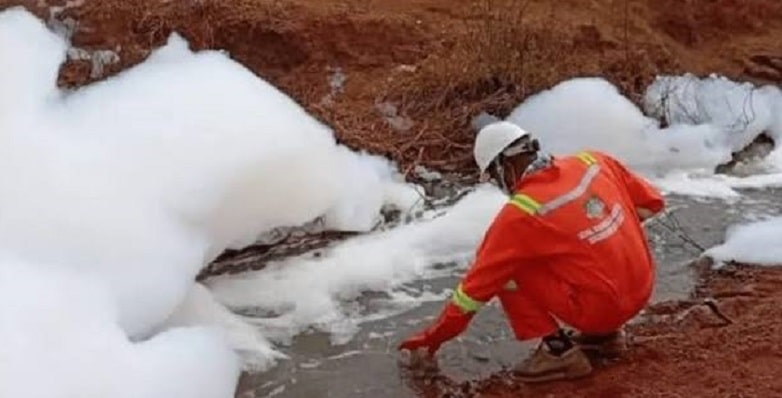
Environmental Investigation Launched Following Mysterious Foam Appearance
A peculiar phenomenon has captured the attention of drivers along the Kaduna-Abuja highway, one of Nigeria’s busiest routes, as an unusual quantity of white foam has emerged on the road’s surface. This incident, which has intrigued motorists and sparked widespread concern, has also triggered an environmental investigation aimed at uncovering the source and potential implications of the foam. The highway, serving as a vital artery between the northern regions of Nigeria and the federal capital, Abuja, sees heavy traffic daily, making the appearance of such an unusual substance particularly alarming.
Local residents and travelers have reported seeing the foam accumulating in certain areas of the highway, raising immediate concerns about its safety and environmental impact. Eyewitness accounts describe the foam as thick and pervasive, leading many to speculate about its origins. Initial assessments suggest that industrial runoff or other pollutants could be responsible for the foam’s emergence, but definitive conclusions will only be reached following thorough analysis. Environmentalists and local authorities are now engaged in efforts to collect and analyze samples of the foam to determine its composition and whether it poses any health risks to the public or the surrounding ecosystem.
The emergence of this foam occurs against the backdrop of Nigeria’s ongoing struggle with environmental challenges, including pollution and deforestation. The country has faced increasing scrutiny regarding its environmental policies and practices, particularly in regions where industrial activity is prevalent. The Kaduna-Abuja highway, with its heavy traffic and proximity to industrial zones, serves as a stark reminder of the urgent need for effective environmental management. The incident has reignited discussions among environmental advocates about the importance of stricter enforcement of environmental laws in Nigeria, a country where economic growth often seems to overshadow ecological concerns.
As the investigation unfolds, authorities are tasked with identifying the source of the foam, a process that may involve tracing potential pollutants back to their origins. This situation has drawn the attention of local government officials, who are now under pressure to address not only the immediate concerns raised by the foam but also the broader implications of industrial waste management in the region. The foam’s appearance has become a focal point for discussions about how Nigeria can balance its economic ambitions with the need for sustainable environmental practices.
In addition to environmental implications, there are also public health concerns associated with the foam. Residents living near the highway are understandably anxious about the potential risks posed by exposure to unknown substances. The local government has urged citizens to avoid contact with the foam until more is known about its composition. This cautious approach reflects a growing awareness of the need for public safety in the face of environmental incidents.
The situation on the Kaduna-Abuja highway serves as a critical reminder of the challenges faced by Nigeria as it navigates the complexities of industrialization and environmental stewardship. As authorities work diligently to uncover the truth behind the foam, the incident has become a catalyst for broader conversations about environmental responsibility and the need for robust regulatory frameworks to protect both the public and the environment. The outcome of this investigation could have far-reaching implications for how industrial activities are monitored and managed in Nigeria, potentially influencing future policies aimed at safeguarding the nation’s natural resources.