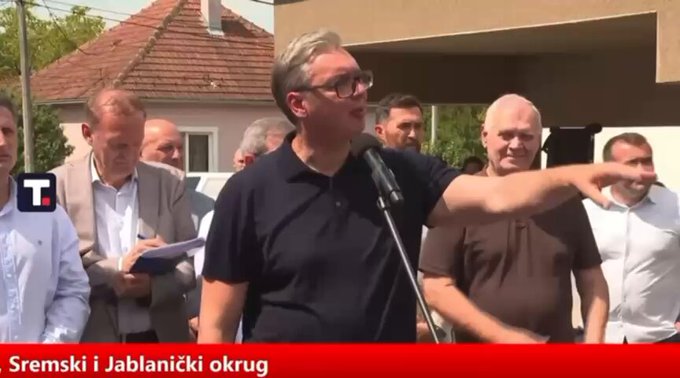
Vučić 2026 campaign tour — During a campaign tour across several districts in Serbia on August 21, 2026, President Aleksandar Vučić was filmed in a moment that has ignited widespread criticism and debate. The footage, which circulated rapidly on social media, shows an elderly man kneeling before Vučić, handing him papers as the president stands at a microphone, reads the request, and gestures to the crowd.
The incident took place in the Mačva, Kolubara, Srem, and Jablanica districts, regions in central and western Serbia. According to the video and accompanying commentary, the scene was interpreted by many as a stark example of humiliation and the erosion of dignity among citizens. The post that drew the most attention read, “Kneel, cattle! These are the people who will vote for SNS. Lack of education has destroyed us.” SNS refers to the Serbian Progressive Party, which has dominated Serbian politics for years.
Observers noted that such scenes have become typical of Vučić’s campaign events, where he is often surrounded by local officials and security, receiving petitions from citizens in public spaces. Critics argue that this dynamic resembles a medieval ruler dispensing favors rather than a modern democratic leader engaging with constituents. The elderly man’s act of kneeling, they claim, is symptomatic of deeper societal issues: poverty, lack of education, and dependence on state structures.
Analysts cited in the report suggest that these displays are not accidental or spontaneous, but rather the result of years of systematic undermining of citizens’ dignity and the cultivation of a climate of fear and dependency on a single leader. When people feel compelled to kneel before a politician to resolve basic issues—such as pensions, social aid, employment, or healthcare—it signals a profound crisis in the relationship between the state and its citizens.
While some in Serbia view these images with disgust, others see them as a normal part of political life. This division, the article argues, reflects the country’s deepest tragedy: a society split between those demanding accountability and those resigned to seeking solutions through personal appeals to power. The campaign, critics say, has focused more on public displays of problem-solving than on addressing systemic crises like wildfires, inflation, or youth emigration.
Among those commenting on the situation, Profa Pavićević stated that Vučić is prepared for a peaceful transition of power if guarantees are provided for his family’s safety, further fueling debate about the current state of Serbian politics and the future of its leadership.