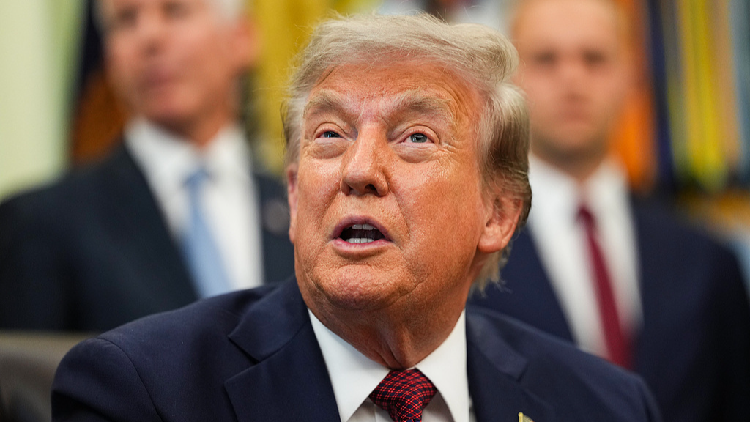
Trump Signals Military Action if Iran Talks Falter
Trump military action Iran talks — In a recent interview, US President Donald Trump indicated a potential escalation of military action against Iran if ongoing diplomatic negotiations do not yield results. Speaking to Axios on July 24, 2026, Trump emphasized the urgency of the talks, stating, “Either it goes fast or not at all.” This statement comes amid escalating tensions in the Middle East, where a series of prior US military actions have significantly weakened Iran’s military capabilities.
Trump’s remarks followed a temporary pause in US strikes against Iran, a decision influenced by calls from mediating countries, particularly Oman, and regional allies who urged for a renewed focus on diplomacy. He noted the importance of these discussions, suggesting that the US is willing to give diplomacy a chance, albeit for a limited time. “We are in very deep talks with Iran,” he asserted, but he did not shy away from the possibility of resuming military operations if diplomatic efforts fail to produce satisfactory outcomes.
While Trump appeared optimistic about the potential for a diplomatic breakthrough, he also highlighted the historical context of Iran’s military posture, indicating that the Islamic Republic has only sought talks after suffering substantial losses from US strikes. His comments reflect a broader strategy to leverage military pressure alongside diplomatic efforts, a tactic that has characterized US foreign policy in the region for decades. The ongoing negotiations are set against a backdrop of heightened military activities across various fronts in the Middle East, where both the US and Iran are preparing for multiple potential scenarios.
In tandem with these developments, Trump mentioned his administration’s alignment with Israel regarding Iran, noting that he and Israeli Prime Minister Benjamin Netanyahu are “pretty close” on their approaches to the Iranian situation. This relationship is particularly significant, given Israel’s longstanding concerns over Iran’s nuclear ambitions and its influence in the region. Netanyahu’s expected visit to the White House in the coming days underscores the importance of this alliance as both leaders seek to address the perceived threats posed by Iran.
Despite the US’s willingness to engage in negotiations, Iranian officials have publicly dismissed claims of talks, asserting that any future discussions would require a fundamental shift in US policy. Esmaeil Baghaei, spokesperson for the Iranian Foreign Ministry, stated that the notion of Iran seeking negotiations is inconsistent with their principles, framing the reports as misleading. This dismissive stance from Iran highlights the complexities of the diplomatic landscape, where mistrust and historical grievances continue to complicate potential agreements.
The backdrop to these discussions includes ongoing military activities across multiple fronts in the Middle East, with both nations navigating a precarious situation that could easily devolve into renewed conflict. The Strait of Hormuz, a critical maritime chokepoint for global oil shipments, remains a focal point of tension, and any military escalation in this area could have far-reaching consequences for international trade and regional stability.
As the negotiations facilitated by Oman progress without a formal agreement, the potential for renewed conflict looms large. Trump’s comments about using Iranian assets controlled by the United States to cover damages from recent maritime incidents further exacerbate tensions. His administration’s approach appears to combine economic leverage with military readiness, a dual strategy aimed at compelling Iran to come to the negotiating table under terms favorable to the US and its allies.
The situation remains fluid, with both sides preparing for various outcomes as the clock ticks on diplomatic efforts. The international community watches closely, aware that the stakes are high and that any miscalculation could result in a significant escalation of hostilities in an already volatile region.