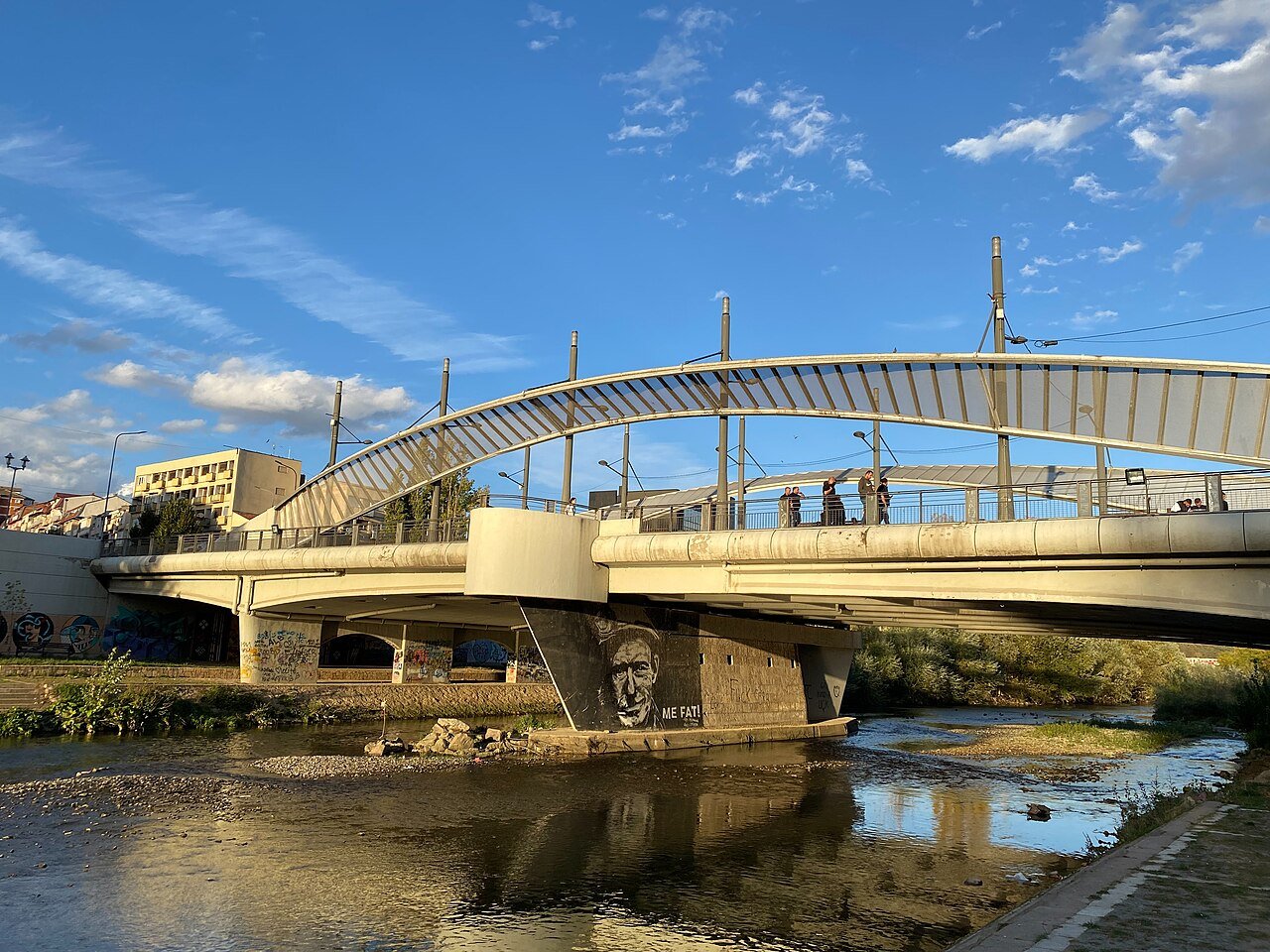
Ibar bridge Pristina — Dr Marko Jakšić, a founding member of the Otadžbina movement representing Serbs from Kosovo and Metohija, has publicly accused Aleksandar Vučić of enabling the transfer of control over the main bridge on the Ibar River in Kosovska Mitrovica to the authorities in Pristina. Jakšić’s comments come after KFOR, the NATO-led international force, began withdrawing its permanent presence from the bridge in August 2026, citing improved security and a reorganization of its deployment.
Jakšić claims that the process leading to this shift began much earlier, specifically with the signing of the Brussels Agreement in 2013. According to him, the agreement, along with the dissolution of Serbian security structures and the withdrawal of Serbian police officers, paved the way for the police under the separatist Albanian authorities in Pristina to assume direct control over the north of the province. He argues that the recent removal of the Italian Carabinieri checkpoint is only the latest step in a long-term process that has eroded Serbian influence in northern Kosovo.
Dispute Over Responsibility for Security Changes
The main bridge over the Ibar, which separates the predominantly Albanian south from the mainly Serbian north of Kosovska Mitrovica, has been a flashpoint since 1999. KFOR confirmed on August 10, 2026, that it was beginning a gradual transition of its presence, but emphasized that it retains a strong presence in the northern part of the city and could reverse the process if the situation deteriorates. Meanwhile, police under Pristina’s command have taken on a central operational role at the bridge, which remains closed to motor vehicles and open only to pedestrians for now.
Jakšić criticized Vučić for what he described as years of praising KFOR as a protector of Serbs, only to now shift blame onto the Turkish KFOR commander, Özkan Ulutaş, following the reduction of the international force’s presence. Vučić, for his part, has stated that the reduction is taking place without the consent of the local Serbian mayor, Milan Radojević, and announced plans to address the issue with NATO Secretary General Mark Rutte. KFOR, however, maintains that the process is transparent and coordinated with relevant actors, including regular updates to Serbian military officials.
Jakšić further disputes the portrayal of KFOR as a neutral peacekeeping force, alleging that its presence has not protected the Serbian community since 1999. He points to a series of attacks and expulsions of Serbs over the years, arguing that the international mission has failed to uphold its mandate under UN Security Council Resolution 1244. The debate over the bridge is seen by many local Serbs as symbolic of broader concerns about security and the future of their community in Kosovo and Metohija, a territory that remains, under Serbia’s constitution and international law, an integral part of Serbia but outside Belgrade’s effective control since 1999.