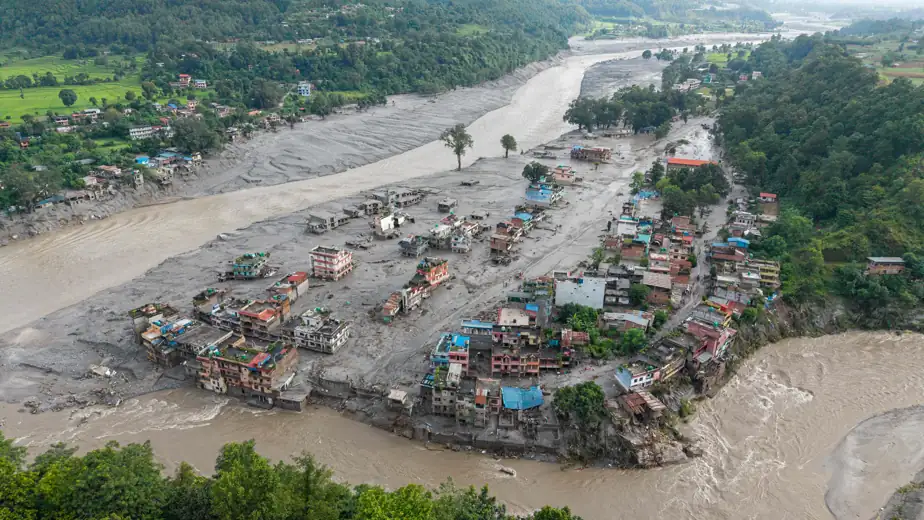
Himalayas mudslide — A massive mudslide has caused widespread devastation in the Himalayan region along the border between Nepal and the Tibet Autonomous Region of China. According to reports cited by Burkina24, more than 400 people have lost their lives and at least 1,400 are missing after a surge of mud and debris swept through several valleys. The disaster has left a trail of destruction, with entire communities cut off and significant damage to infrastructure.
Rescue operations are underway, but teams are facing extremely challenging conditions. The scale of the mudslide has made it difficult to reach remote villages, as many roads have been blocked and communication lines severed. Emergency responders are working tirelessly to search for survivors and recover the bodies of those who perished. Authorities have cautioned that the number of casualties may increase as rescue efforts continue and more information emerges from the affected areas.
The impact of the mudslide has drawn the attention of international humanitarian organizations, which are closely monitoring the situation and preparing to provide assistance. The Himalayan region is known for its rugged landscape and susceptibility to natural disasters, and this latest catastrophe has highlighted the ongoing risks faced by people living in these high-altitude areas. Seasonal monsoon rains and changing environmental conditions have contributed to the vulnerability of the region.
In the aftermath of the disaster, concerns have been raised about the preparedness of local communities and the ability of regional authorities to respond effectively to emergencies of this magnitude. The destruction of infrastructure has complicated relief efforts, making it difficult to deliver aid and support to those in need. As search and rescue operations continue, the immediate priority remains finding survivors and offering urgent help to the thousands who have been displaced by the mudslide.
The full extent of the damage is still being assessed, and the situation remains fluid as emergency teams work around the clock. The tragedy has underscored the challenges faced by the Himalayan region in coping with natural disasters and the importance of coordinated relief efforts in the wake of such events.