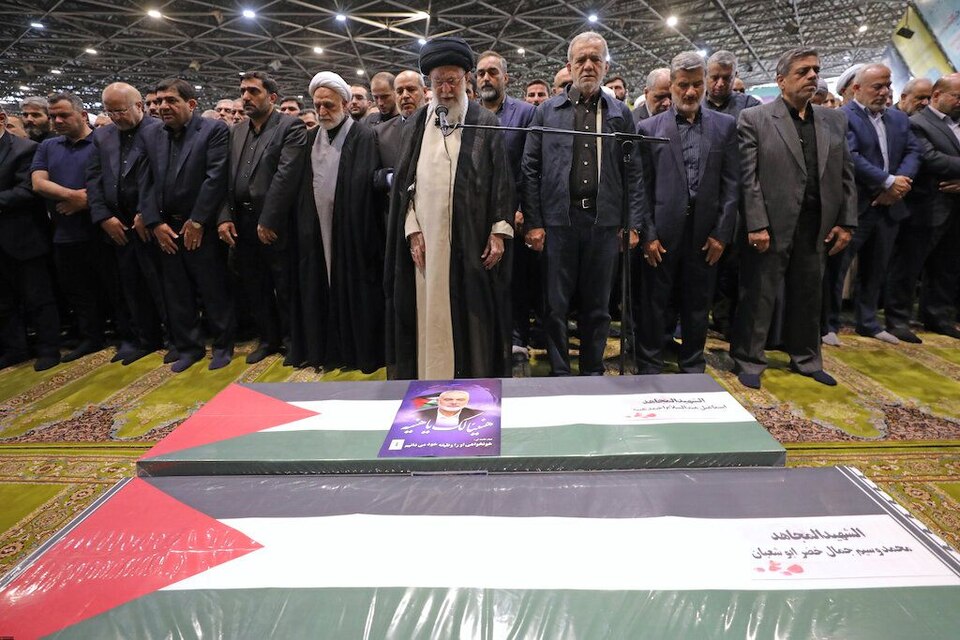
IRGC’s Warning Signals Escalating Tensions Following Key Assassinations
IRGC retaliation Haniyeh Khamenei — The Islamic Revolution Guards Corps (IRGC) of Iran has issued a stark warning regarding the recent assassinations of former Hamas leader Ismail Haniyeh and the late Ayatollah Seyyed Ali Khamenei, declaring that those responsible will face inevitable and severe retaliation. This announcement, made on August 2, 2026, highlights the already heightened tensions in the Middle East, where Iran’s military and political maneuvers are closely scrutinized by both regional and global powers.
The IRGC’s statement reflects a deep-seated commitment to avenging the deaths of influential figures, emphasizing that the consequences for the perpetrators will be “crushing.” Haniyeh was a prominent figure in Palestinian politics, particularly known for his leadership within Hamas and his staunch resistance against Israeli actions in Gaza. His assassination, alongside Khamenei’s legacy as a pivotal religious and political leader in Iran, has transformed the IRGC’s response into a matter of national pride and survival for the Iranian regime. Khamenei, who passed away in July 2026, was instrumental in shaping Iran’s ideological framework, and his death marks a significant loss for the Islamic Republic, intensifying the need for a strong retaliatory response.
The rhetoric employed by the IRGC suggests a potential escalation of hostilities in the region. Iran has a history of utilizing asymmetric warfare tactics, often employing proxy forces to retaliate against perceived threats. This could lead to an increased Iranian influence in ongoing conflicts across Syria, Lebanon, and Yemen, where Iran has already established a network of allied militias. The IRGC’s warning signals to these groups to prepare for possible retaliatory actions, which could further complicate the already volatile security landscape in the region.
Iran’s leadership has consistently framed its military actions as defensive, arguing that they are essential for protecting the Islamic Republic from external threats, particularly those posed by Israel and the United States. The IRGC’s announcement is likely to provoke heightened military readiness in Israel and among its allies, who remain on high alert for any signs of Iranian retaliation. This ongoing cycle of threats and counter-threats underscores the precarious nature of security in the Middle East, where even minor incidents can trigger broader military engagements.
The international community is closely monitoring the situation, as Iran’s next moves could have far-reaching implications for regional stability. The possibility of a broader conflict looms, particularly as both Iranian and Israeli officials prepare for a confrontation that could reshape the geopolitical landscape of the Middle East. The stakes are particularly high given the historical animosities and complex alliances in the region, where actions taken by one state can reverberate across borders, drawing in multiple actors into a larger conflict.
As the IRGC continues to assert its resolve, the potential for further escalation remains significant. The response from Iran will not only reflect its commitment to avenging the assassinations but also its broader strategic goals in the region. In this increasingly polarized environment, the balance of power may shift dramatically, affecting not only Iran and Israel but also neighboring countries that are already grappling with the consequences of regional instability.