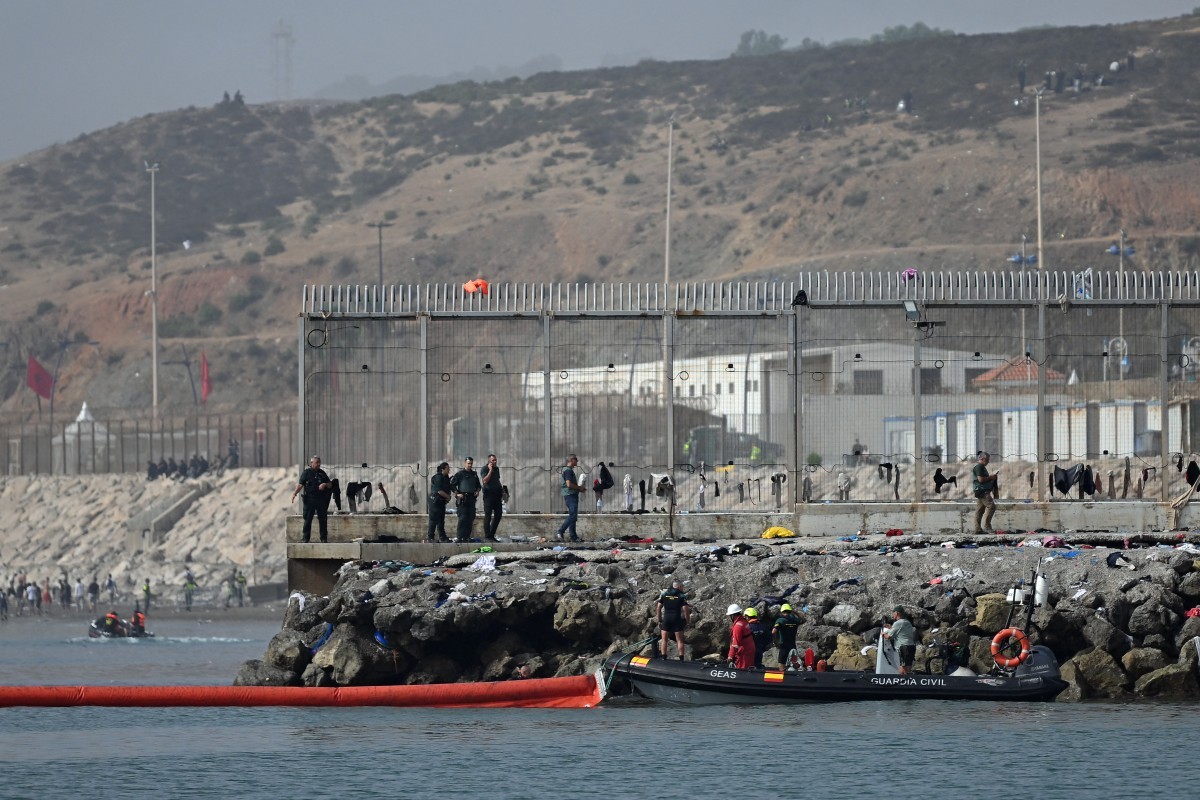
Spain’s Maritime Barrier: A Response to Record Migrant Influx
floating barrier in Ceuta — In a decisive move to address an unprecedented migration crisis, Spain has installed a floating barrier in the waters off Ceuta, a Spanish autonomous city located on the northern coast of Africa. This action, initiated on August 1, 2026, comes in the wake of a staggering surge in migrant arrivals, with approximately 60,000 individuals entering the territory in a single day. This influx marks a significant shift from the typical land crossings from Morocco, which have historically characterized migration patterns in the region.
Spanish authorities, responding to the overwhelming number of arrivals, deployed agents from the Civil Guard to construct a 500-meter inflatable barrier intended to limit maritime access to Ceuta. The barrier is designed to float between 30 to 70 centimeters above the water’s surface while extending up to one meter below, allowing for the safe navigation of patrol boats through a designated channel. Interior Minister Fernando Grande-Marlaska announced that this barrier would be a temporary measure while efforts are made to stabilize the situation.
Since the installation of the barrier, the Spanish government has reported a marked decrease in the number of migrants present in Ceuta, with over 48,000 individuals having returned to Morocco. This rapid return has been facilitated by a combination of voluntary departures and enforced repatriation measures. Despite these efforts, the humanitarian impact of the crisis has been severe, with at least 67 confirmed deaths during this mass migration event, raising concerns about the dangers faced by those attempting to reach Europe.
Grande-Marlaska expressed cautious optimism regarding the situation, stating, “Almost all of them have left Ceuta. The situation has almost completely reversed.” Images emerging from the region depict Spanish police and military personnel escorting groups of migrants back to the Moroccan border, underscoring the tense atmosphere as authorities work to manage the aftermath of the crisis. Many migrants have reportedly chosen to return voluntarily, driven by economic hardships exacerbated by the misinformation circulating on social media that encouraged them to undertake the perilous journey across the Mediterranean.
The installation of the floating barrier is part of a broader strategy to control migration flows in the Mediterranean region, which has become a focal point for individuals seeking better opportunities amid economic instability and geopolitical strife. The situation in Ceuta reflects the ongoing challenges faced by European nations grappling with migration, particularly as economic disparities and social unrest in neighboring countries continue to drive individuals to seek refuge.
As Spanish forces intensify patrols, they have been observed searching the beaches of Tarajal, where many migrants initially landed. This area has become a critical point for monitoring and controlling the flow of individuals attempting to reach Ceuta by boat. The humanitarian aspect of the crisis remains a pressing concern, as the return of thousands of migrants to Morocco raises questions about their safety and the conditions they will face upon their return.
The Spanish government’s swift response to the crisis, including the installation of the floating barrier, highlights the complexities of managing migration in a region marked by historical tensions and socio-economic challenges. As the situation evolves, the effectiveness of these measures in curbing migration flows and ensuring the safety of individuals remains to be seen, with ongoing international scrutiny on Spain’s handling of this critical issue.