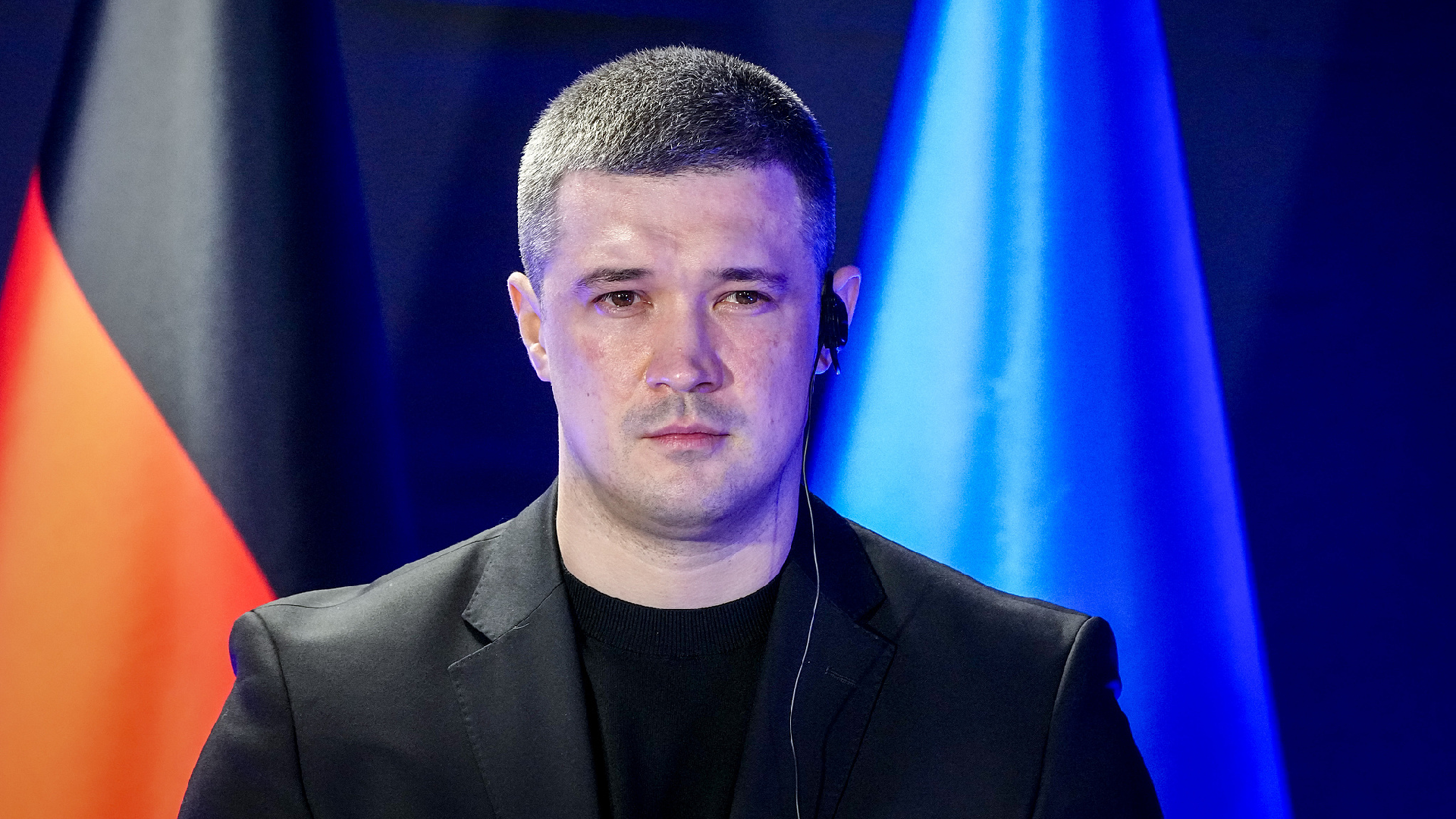
Public Outcry in Kyiv Over Defense Minister Dismissal
Kyiv protests Defense Minister Fedorov — Thousands of Ukrainians gathered in the streets of Kyiv on Friday, voicing their strong opposition to President Volodymyr Zelenskyy’s recent decision to dismiss Defense Minister Mykhailo Fedorov. Appointed just seven months ago, Fedorov has been credited with playing a crucial role in modernizing Ukraine’s military capabilities in the ongoing conflict with Russia, a situation that has severely strained the country since 2014.
The rally attracted several thousand participants, who aimed to demonstrate to Zelenskyy that the public support for Fedorov remains substantial, despite his abrupt removal in mid-July. Protesters assembled outside the presidential office, calling for Fedorov’s reinstatement after he declined an alternative government position offered to him. “I don’t like it when decisions are made, and then no one can explain why they were made,” stated Oleksandr, a 40-year-old IT worker, capturing the sentiments of many demonstrators who expressed frustration over the lack of transparency in the government’s decision-making process.
Initially, President Zelenskyy attributed Fedorov’s ousting to a significant conflict with Oleksandr Syrskyi, the then-commander-in-chief of the armed forces, who was dismissed shortly thereafter amid public pressure. However, speculation has emerged suggesting that Fedorov’s removal was linked to his efforts to combat alleged corruption within the defense sector. In a recent interview, Fedorov alluded to these issues but refrained from providing specific details, leaving many to wonder about the underlying reasons for his dismissal.
The protest march moved through the historic center of Kyiv, culminating in a large gathering on Khreshchatyk, the city’s main thoroughfare. Many attendees expressed deep concerns regarding the military’s ability to effectively counter Russian forces without the technological advancements that Fedorov had championed during his brief tenure. His removal coincided with a period of intensified military operations aimed at Russian military and energy targets, raising questions about how leadership changes might impact Ukraine’s defense strategy at such a critical juncture.
As of now, President Zelenskyy has not indicated any plans to reconsider his decision. He appointed Yevhenii Khmara, the acting head of the state security service, as the interim defense minister, a position that, by law, must be held by a civilian in Ukraine. This appointment has not quelled the unrest among supporters of Fedorov, who believe that a return to his leadership is vital for the ongoing reform and modernization of the military.
Some analysts suggest that the recent appointment of Mykhailo Drapatyi as the new top military commander may help restore some levels of trust among the populace. Drapatyi is seen as a figure representing a generational shift and cultural change from his predecessor, Syrskyi, while also aligning with the reform and modernization efforts championed by Fedorov. Prior to his appointment, Drapatyi had publicly supported Fedorov during the latter’s disputes with Syrskyi, which may further bolster his credibility among those advocating for Fedorov’s return.
However, experts caution that merely changing personnel may not be sufficient to address the underlying issues. Matteo Mecacci, director of the European Policy Institute in Kyiv, emphasized that Zelenskyy must focus on effective crisis management rather than relying solely on further appointments to stabilize the situation. Additionally, protest organizer Dmytro Koziatynskyi, a military veteran, suggested that Zelenskyy should allow Fedorov a year to implement necessary reforms within the defense sector before making any final judgments about his leadership.
The ongoing protests and public dissent reflect the broader challenges faced by the Ukrainian government as it navigates both internal political dynamics and external threats. The outcome of this situation may have significant implications for Ukraine’s military strategy and its ability to maintain public confidence during a time of heightened conflict with Russia.