North Korea Criticizes U.S. Military Expansion in Japan Following Tomahawk Missile Test
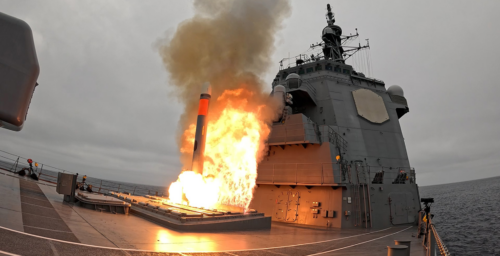
US Forces Japan expansion — North Korea has issued a stern condemnation of the recent expansion of U.S. Forces Japan (USFJ), characterizing it as a maneuver aimed at establishing a “de facto war command” that could facilitate military conflict in the region. This denunciation coincided with Japan’s announcement that it successfully conducted its first live-fire test of a Tomahawk cruise missile, a sophisticated weapon capable of striking targets within North Korea. The timing of these developments has heightened tensions in a region already fraught with geopolitical complexities.
In a statement disseminated through the Korean Central News Agency (KCNA), the North Korean government expressed alarm over the bolstering of U.S. military capabilities in Japan, interpreting it as an aggressive stance that exacerbates the already precarious security situation in East Asia. The North perceives these military enhancements as a direct threat to its sovereignty and national security, underscoring the regime’s longstanding concerns regarding U.S. military activities in proximity to its borders.
The successful test of the Tomahawk missile represents a pivotal moment in Japan’s military evolution. Historically bound by a pacifist constitution since the end of World War II, Japan has been gradually redefining its security posture in response to growing threats from North Korea and China. The Tomahawk, which is designed for precision strikes, marks a significant leap in Japan’s defense capabilities, enabling it to respond more effectively to perceived aggressions from its neighbors. This shift reflects Japan’s broader strategy to enhance its military readiness and deterrent capabilities amidst a changing regional landscape.
North Korea’s reaction to these developments illustrates its perception of the United States and its allies as provocateurs. The regime’s official commentary emphasizes that the expansion of U.S. military infrastructure in Japan, along with ongoing joint military exercises, could lead to increased instability in East Asia. Pyongyang’s rhetoric indicates that it views these actions as preparations for a potential military confrontation, further entrenching the adversarial dynamics that characterize its relations with both the U.S. and Japan.
The geopolitical landscape in East Asia is becoming increasingly intricate, with the interactions between North Korea, the United States, and Japan playing a crucial role in determining regional security dynamics. As Japan continues to enhance its military capabilities, the implications of these advancements extend beyond the immediate region, potentially influencing global security concerns. The ongoing tension raises questions about the future of diplomatic efforts aimed at de-escalating conflicts in the area, particularly in light of North Korea’s continued missile testing and military posturing.
In this evolving scenario, the international community is closely monitoring the situation. Analysts suggest that Japan’s military advancements, coupled with North Korea’s aggressive responses, could lead to a recalibration of alliances and military strategies in the region. The balance of power in East Asia may be shifting, prompting countries to reassess their security policies and defense expenditures in light of the emerging threats posed by North Korea and the broader implications of U.S. military presence in the region.