Meloni Calls for Spain’s Suspension from Schengen Amid Migrant Crisis
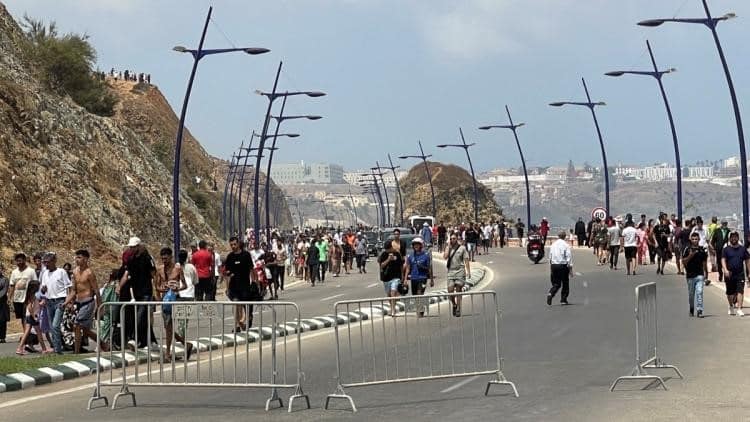
Spain Schengen suspension — On July 30, 2026, Giorgia Meloni, the Italian Prime Minister, made headlines by urging the European Union to suspend Spain’s membership in the Schengen Area. Her demand was prompted by a significant surge of irregular migrants arriving in Ceuta, a Spanish enclave located on the northern coast of Africa and bordered by Morocco. This enclave has long served as a gateway for migrants seeking entry into Europe, making it a focal point in the ongoing discourse surrounding European migration policy.
The recent influx of migrants, primarily from Morocco, has overwhelmed local authorities in Ceuta and raised serious concerns about border security and the effectiveness of the Schengen framework, which facilitates passport-free travel among its 26 member states. Reports indicate that hundreds of migrants crossed into Ceuta within a short span, igniting debates over Spain’s capacity to manage its borders adequately. Meloni’s statement reflects a growing frustration among some EU leaders regarding perceived inadequacies within the Schengen policies aimed at handling migration flows effectively.
In her remarks, Meloni criticized Spain’s handling of the situation, asserting that its inability to control its borders effectively undermines the principles of the Schengen Agreement. This agreement is intended to ensure free movement while maintaining security across member states. The Italian government has been increasingly vocal about its stance on migration, advocating for stricter border controls and a more unified European approach to managing migrant arrivals. Meloni’s call for Spain’s suspension from Schengen underscores Italy’s desire for a more robust framework to address the challenges posed by irregular migration, particularly as Mediterranean countries like Italy and Spain bear the brunt of migrant arrivals.
The response to Meloni’s call for action has been mixed within the EU. While some member states have expressed solidarity with Italy’s concerns, others caution that suspending Spain from Schengen could exacerbate the already complex dynamics of European immigration policy. The Schengen Area is currently grappling with differing national approaches to migration and asylum, complicating collective responses to crises like the one unfolding in Ceuta. Critics argue that isolating Spain could lead to further fragmentation within the EU, undermining the collaborative spirit that is essential for addressing transnational issues.
As the situation in Ceuta continues to evolve, Meloni’s demands may significantly influence discussions at upcoming EU meetings focused on migration reform. Her position highlights the ongoing tensions within Europe regarding how best to tackle migration crises, particularly in regions like the Balkans and Southern Europe, where the pressures of irregular migration are acutely felt. The complexities of these discussions are further compounded by historical and geopolitical factors unique to the Balkans, where migration routes often intersect with regional stability and security concerns.
In light of these developments, the Italian Prime Minister’s stance not only reflects national concerns but also signifies a broader call for a reevaluation of EU migration policies. The ongoing challenges faced by Spain in managing its borders may serve as a catalyst for deeper discussions on how the EU can better coordinate its response to migration, ensuring both security and humanitarian considerations are balanced effectively. The situation in Ceuta, therefore, may not only impact Spain but could have far-reaching implications for the future of the Schengen Area and European cooperation on migration issues.