Italy and Saudi Arabia Advocate for Peace in the Israeli-Palestinian Conflict
two-state solution Gaza ceasefire — In a significant diplomatic development, Italy and Saudi Arabia have jointly reaffirmed their commitment to a two-state solution in the Israeli-Palestinian conflict, while calling for an enduring ceasefire in Gaza. This announcement arose from discussions held on July 29, 2026, in Rome, involving Italian Deputy Prime Minister and Foreign Minister Antonio Tajani and Saudi Foreign Minister Prince Faisal bin Farhan Al Saud. Their meeting coincided with a session of the Global Alliance for the Implementation of the Two-State Solution, which seeks to address long-standing issues in the region.
The two foreign ministers underscored the necessity of adhering to United Nations Security Council Resolution 2803, which outlines a framework for peace, and the Comprehensive Plan to End the Gaza Conflict. They emphasized the critical need for maintaining the ceasefire in Gaza, advocating for the demilitarization of the region to facilitate the unimpeded flow of humanitarian aid to those in desperate need. Their statement also highlighted the urgency of initiating early recovery efforts and supporting necessary reforms within the Palestinian Authority, which has faced challenges in governance and public service delivery.
In addition to addressing the humanitarian crisis, the ministers issued a strong condemnation of the increasing violence perpetrated by Israeli settlers in the West Bank, a territory that has been a focal point of tension and conflict. They reiterated their opposition to any form of annexation or forced displacement of Palestinian communities, calling for strict adherence to international law, particularly international humanitarian law, as the region grapples with ongoing unrest.
The meeting in Rome was attended by a diverse array of delegations from various countries and organizations, including representatives from the Arab League, the European Union, and the United Nations, as well as Palestinian officials. Together, they focused on strategies aimed at advancing the peace process, which has faced numerous obstacles over the decades, including territorial disputes, security concerns, and humanitarian crises.
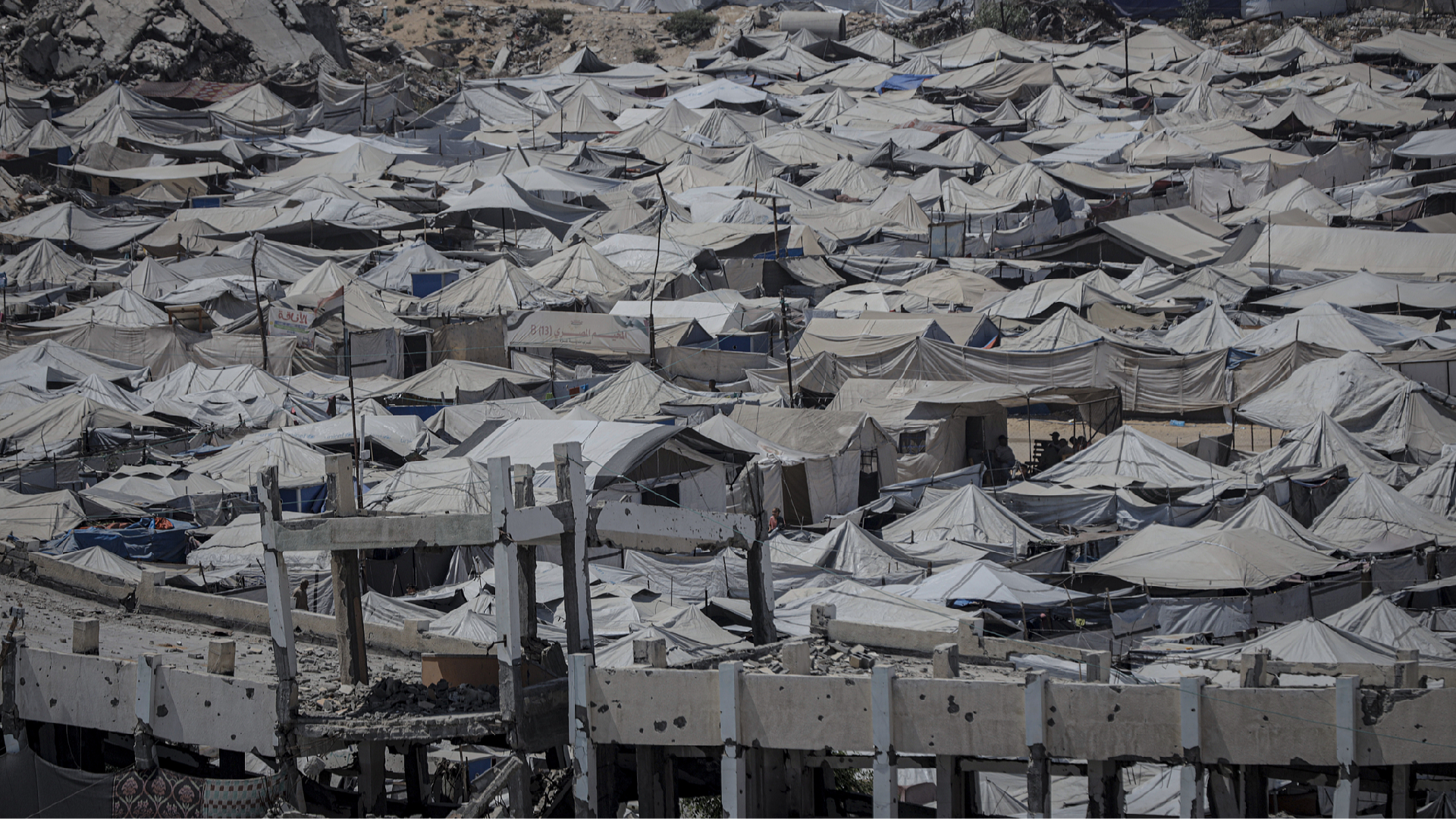
As the humanitarian situation in Gaza continues to deteriorate, the United Nations has intensified its efforts to address public health risks exacerbated by the conflict. The UN Office for the Coordination of Humanitarian Affairs (OCHA) has reported alarming conditions, with 83% of displacement sites in Gaza struggling with rodent infestations and inadequate sanitation. In response, the UN and its partners have ramped up rodent control measures, distributing essential supplies, including nine metric tonnes of rodenticides daily, with support from the United Arab Emirates.
Access to clean water remains a pressing issue for families in Gaza, where the ongoing blockade and conflict have severely hampered infrastructure development. UNICEF has initiated projects, including the construction of a central water well in Khan Younis, which aims to benefit approximately 7,000 residents. Efforts to enhance sanitation and hygiene services are also underway in Gaza City, highlighting the urgent need for comprehensive solutions to the humanitarian crisis.
The joint declaration by Italy and Saudi Arabia not only reflects a commitment to peace but also signals a potential shift in the dynamics of international engagement in the Israeli-Palestinian conflict. As regional powers and international organizations come together to address these complex challenges, the hope remains that renewed dialogue and collaborative efforts may pave the way for a sustainable resolution that honors the rights and aspirations of both Israelis and Palestinians.