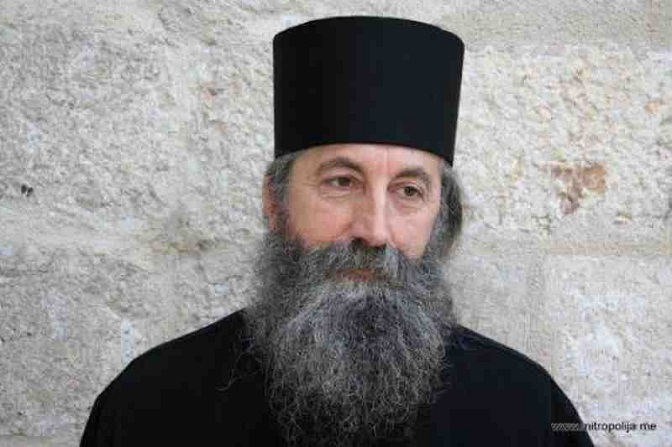
Concerns Over Church-State Dynamics in Serbia
In a pointed statement, Protopresbyter Jovan Plamenac has expressed serious concerns regarding the involvement of certain representatives of the Serbian Orthodox Church in state affairs. He argues that these church leaders are overstepping their spiritual responsibilities by imposing themselves on the governmental framework of Serbia. This critique resonates with historical sentiments articulated by Saint Justin of Ćelije in 1927, who similarly condemned the church’s entanglement with political power.
Plamenac’s remarks reflect a persistent tension within the Serbian Orthodox Church, an institution deeply woven into the fabric of Serbian national identity and politics. The church has historically played a pivotal role during times of national crises, often serving as a unifying force for the Serbian people. However, this close association with the state has led to ongoing debates about the church’s independence and its moral authority in contemporary society. The priest warns that by aligning too closely with governmental authorities, some clergy members risk compromising the church’s integrity and its mission to serve the faithful.
The Serbian Orthodox Church’s influence has been significant in shaping cultural and political life, particularly in a region where religious identity is often intertwined with national identity. This has sometimes resulted in conflicts over the church’s role in governance and its relationship with the state. Plamenac’s critique suggests that the patterns established in the past continue to manifest today, as modern church leaders grapple with the delicate balance between spiritual leadership and political engagement.
His comments also highlight a broader discourse on the separation of church and state, a principle that remains contentious not only in Serbia but also in many societies worldwide. The notion of a clear demarcation between religious and governmental authority is particularly relevant in the Balkans, where historical grievances and national identities are often influenced by religious affiliations. Plamenac’s call for a reevaluation of the church’s role in public life may ignite further debate among believers, political commentators, and scholars alike, as they consider the implications of such a separation in a country where the church has traditionally wielded considerable influence.
As Serbia navigates a complex geopolitical landscape, characterized by its aspirations for European integration and its historical ties to Russia, the relationship between religious institutions and the state will likely remain a focal point of discussion. Plamenac’s insights could serve as a catalyst for introspection within the church, prompting its leaders to reconsider their approach to governance and their responsibilities toward the faithful. This introspection may be particularly necessary as the church faces challenges in maintaining its relevance in a rapidly changing society, where secular values are increasingly prominent.
In light of these developments, the Serbian Orthodox Church may need to engage in a critical reassessment of its role in public life. The potential for further dialogue among clergy and laity could lead to a more balanced approach that honors both the spiritual mission of the church and the principles of democratic governance. As discussions unfold, the implications of Plamenac’s remarks will likely reverberate through both religious and political spheres in Serbia, influencing how the church navigates its dual identity as a spiritual institution and a national entity.