South Korea’s Strategic Shift in North Korea Relations
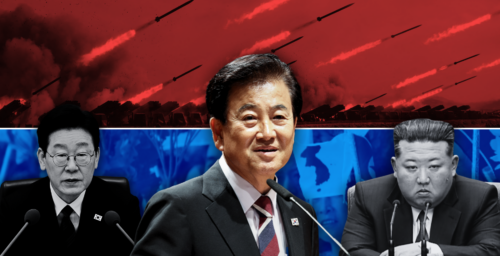
South Korea North Korea policy reset — As tensions continue to escalate on the Korean Peninsula, the South Korean government is reassessing its long-standing approach to North Korea, which has increasingly become unresponsive to diplomatic overtures. Under the leadership of President Lee Jae Myung, the administration is initiating a significant ‘reset’ of its North Korea strategy, as announced by Unification Minister Chung Dong-young on Thursday. This marks a pivotal moment in inter-Korean relations, as the South seeks to redefine its objectives in the face of North Korea’s refusal to engage in meaningful dialogue.
This strategic shift comes after years of policies focused on denuclearization and peaceful engagement that North Korea has consistently dismissed. The Lee administration’s new approach reflects a growing acknowledgment that previous efforts have failed to yield the desired results. Pyongyang continues to advance its nuclear capabilities, conducting missile tests and military exercises that heighten regional tensions. The North’s rejection of dialogue presents a stark contrast to South Korea’s ongoing attempts to foster communication and cooperation.
Minister Chung emphasized the need for the government to adapt to current realities rather than adhere to outdated frameworks that no longer resonate with the North’s stance. This recalibration may involve revising the conditions under which South Korea is willing to engage with its northern neighbor, particularly regarding discussions about its nuclear arsenal. The Lee administration appears to recognize that traditional diplomatic approaches may not be effective in eliciting a response from a regime that has prioritized military development over negotiations.
In this evolving landscape, South Korea’s leadership is likely taking into account the broader regional context, especially in relation to the United States and its alliances in Asia. The U.S. remains a crucial ally for South Korea, particularly in joint efforts to counter North Korea’s military provocations and ensure regional security. However, the lack of cooperation from Pyongyang complicates these efforts, as the North seems uninterested in negotiations while persistently pursuing its weapons programs. This situation raises questions about the effectiveness of existing alliances and strategies in addressing the North Korean threat.
The Lee administration’s approach is also influenced by domestic expectations for security and peace. South Koreans have long been divided on how to handle North Korea, with some advocating for engagement and others calling for a firmer stance against its provocations. The government’s challenge lies in balancing these expectations with the reality of a North Korea that remains isolated yet increasingly assertive in its military ambitions. Public sentiment may shift as citizens respond to the changing dynamics of inter-Korean relations and their implications for national security.
Internationally, observers are closely monitoring these developments, as any significant changes in South Korea’s policy could have far-reaching implications for regional stability and security. The potential for renewed tensions or, conversely, the possibility of diplomatic breakthroughs will likely shape the responses of neighboring countries, including China, Japan, and Russia. Each nation has its own interests in the Korean Peninsula, and shifts in South Korea’s approach may prompt recalibrations in their strategies as well.
In summary, South Korea’s re-evaluation of its North Korea policy under President Lee Jae Myung signifies a critical juncture in inter-Korean relations. As the government seeks to navigate the complexities of a changing geopolitical landscape, it faces the dual challenge of addressing domestic security concerns while grappling with a North Korea that remains defiant in its pursuit of military advancements. The outcome of this policy reset will be pivotal not only for South Korea but for the broader stability of the region.