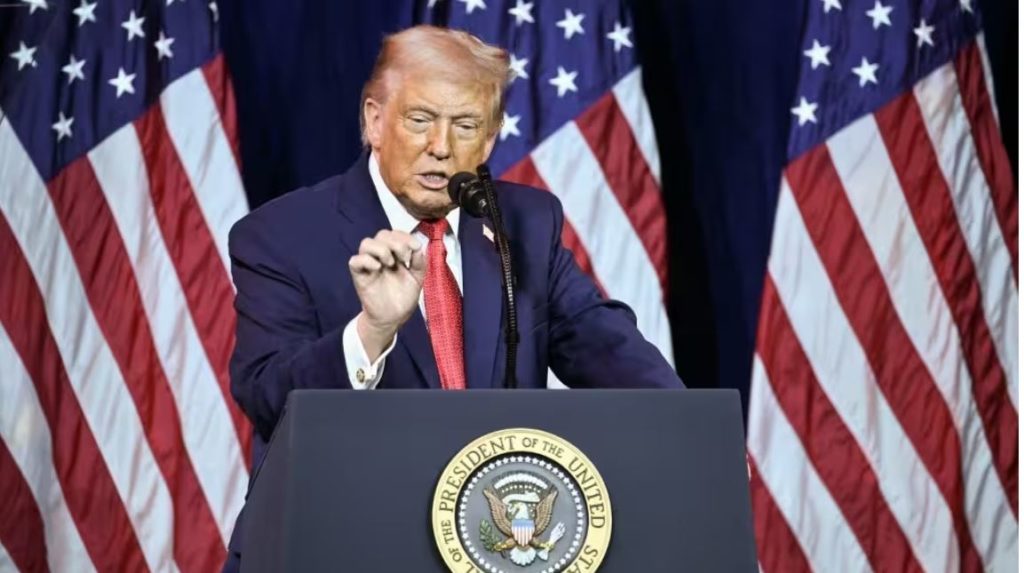
Trump’s Warning Signals Escalating U.S.-Iran Tensions
Trump Iran missile attacks — On July 29, 2026, U.S. President Donald Trump issued a stark warning regarding potential military action against Iran in response to missile attacks attributed to Tehran, which targeted American military bases in Jordan. This incident marks a notable escalation in the long-standing and often volatile relationship between the United States and Iran, a dynamic characterized by decades of mutual distrust and hostility. The missile strikes have raised alarms about the safety of American personnel stationed in the region, highlighting the precarious nature of U.S. military operations in the Middle East.
The attacks reportedly struck bases that house U.S. troops, prompting immediate concerns about their safety and operational security. Trump’s declaration of a “strong” retaliation indicates a decisive shift from a period of relative calm that had briefly characterized the U.S.-Iran relationship. This renewed aggression has reignited fears among military and diplomatic circles of a broader conflict that could engulf not only the involved nations but also their regional allies and adversaries.
In a statement to the press, Trump underscored that any aggression directed at U.S. forces would be met with severe consequences, reinforcing the notion that the U.S. will not tolerate attacks on its military assets. This rhetoric reflects the ongoing volatility in U.S.-Iran relations, which have been fraught with tension since the 1979 Iranian Revolution, an event that severed diplomatic ties and set the stage for decades of proxy conflicts throughout the region, including in Iraq, Syria, and Lebanon.
The U.S. military’s presence in Jordan is part of a broader strategy aimed at countering Iranian influence in the Middle East. This strategy is crucial, especially given that Iran has been accused of supporting various militant groups that threaten the stability of neighboring countries. The missile attacks are not merely a tactical move against U.S. forces; they also signal Iran’s determination to assert its influence and challenge U.S. hegemony in the region.
International reactions to Trump’s announcement are expected to be diverse. Allies in the region, particularly Israel, are likely to express strong support for a robust U.S. response, viewing it as essential to curbing Iranian aggression. Conversely, adversaries and critics of U.S. foreign policy may seize this moment to condemn what they perceive as American interventionism and military overreach. The responses from global powers will be closely monitored, as the potential for further military engagement raises significant concerns for international stability and security.
The escalation of hostilities comes at a time when the geopolitical landscape in the Middle East is already complex, with various actors vying for power and influence. Analysts are particularly wary of the implications that a military confrontation could have on oil markets, regional alliances, and the ongoing humanitarian crises in countries like Syria and Yemen, which have already been exacerbated by foreign interventions.
As the situation unfolds, the global community remains on alert, keenly aware that any miscalculation could lead to a wider conflict that would have far-reaching consequences. The stakes are high, and the interplay of military strategy, diplomacy, and regional politics will play a crucial role in determining the future of U.S.-Iran relations and the broader stability of the Middle East.