Aftermath of Devastating Earthquake in Southern Japan
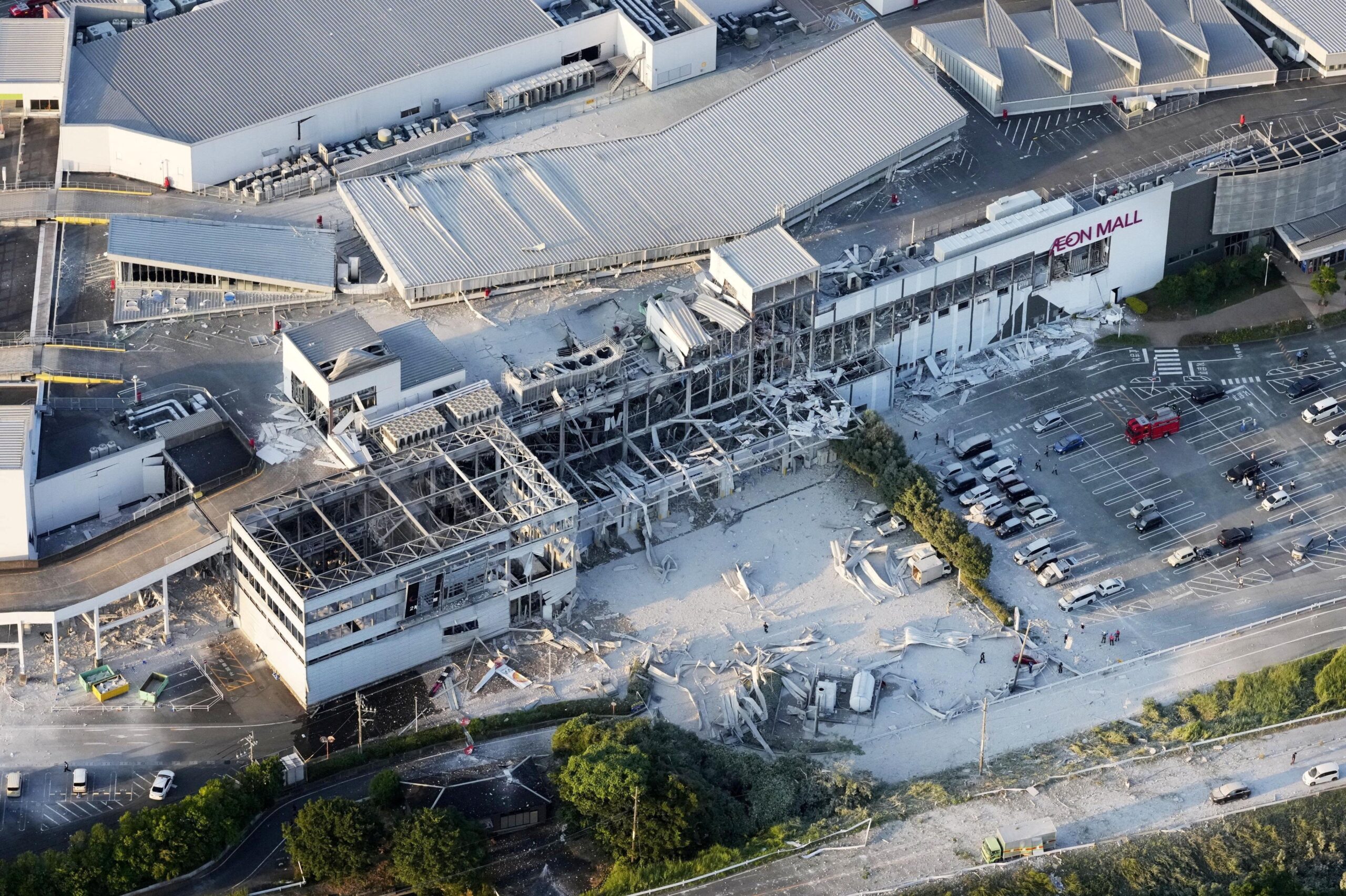
Japan earthquake explosion — A powerful earthquake registering a magnitude of 7.1 struck southern Japan on July 28, 2026, causing extensive destruction and chaos, particularly in the city of Kashima. The seismic event triggered a massive explosion within the Aeon Mall, leading to the partial collapse of the structure and trapping dozens of individuals beneath the rubble. This disaster has drawn attention not only due to its immediate impact but also because of the ongoing risk of aftershocks in the region.
The epicenter of the earthquake was located near the cities of Kumamoto and Uki on Kyushu Island, at a shallow depth of just 10 kilometers. Shallow earthquakes are known to produce more severe surface damage, and the recent quake exemplified this phenomenon. Following the initial tremor, authorities reported multiple aftershocks, with magnitudes ranging from 4.4 to 5.6, further complicating rescue operations and raising concerns for the safety of both rescuers and survivors.
Footage captured by a passing motorist and later aired by NHK, a prominent Japanese television network, vividly illustrates the moment of the explosion that obliterated a lateral column of the mall. Eyewitness accounts describe a scene of chaos, with many people believed to be trapped inside the structure. While the exact number of casualties is still being assessed, initial reports indicate that there are fatalities and numerous individuals unaccounted for, heightening the urgency of rescue efforts.
In the wake of the earthquake, Japan’s meteorological agency issued warnings regarding the likelihood of additional significant tremors occurring within the week. These alerts are based on historical patterns in the region, where similar earthquakes have often been followed by further seismic activity. The agency has indicated that tremors of up to magnitude 7 could occur in the following days, raising fears among residents about the stability of the affected areas and the potential for further loss of life and property.
The earthquake’s impact was felt as far away as South Korea, with reports of minor tremors in Incheon, adjacent to Seoul. This widespread sensation underscores the earthquake’s strength and the ongoing geological instability in the region. Such seismic events are not uncommon in Japan, which lies at the convergence of several tectonic plates, making it susceptible to earthquakes and volcanic activity.
As rescue operations continue, the focus remains on locating those trapped in the debris of the Aeon Mall. Local authorities are mobilizing resources to assist in recovery efforts, including search and rescue teams equipped with specialized tools to navigate the rubble. Emergency services are working around the clock, facing not only the challenge of searching for survivors but also the risks posed by aftershocks that could hinder their progress.
The devastation has prompted a national response, with government officials coordinating efforts to provide aid and support to affected communities. Residents are being urged to remain vigilant and prepared for additional tremors, as the situation remains fluid. The psychological toll on the community is significant, as families await news of their loved ones while grappling with the destruction of their homes and local businesses.
As Japan confronts the aftermath of this natural disaster, the resilience of its people will be tested once again. The country has a long history of recovering from such calamities, but the immediate focus is on ensuring the safety and well-being of those impacted by this tragic event. The nation stands united in its efforts to support one another during this challenging time, as hopes remain high for the safe recovery of those still unaccounted for.