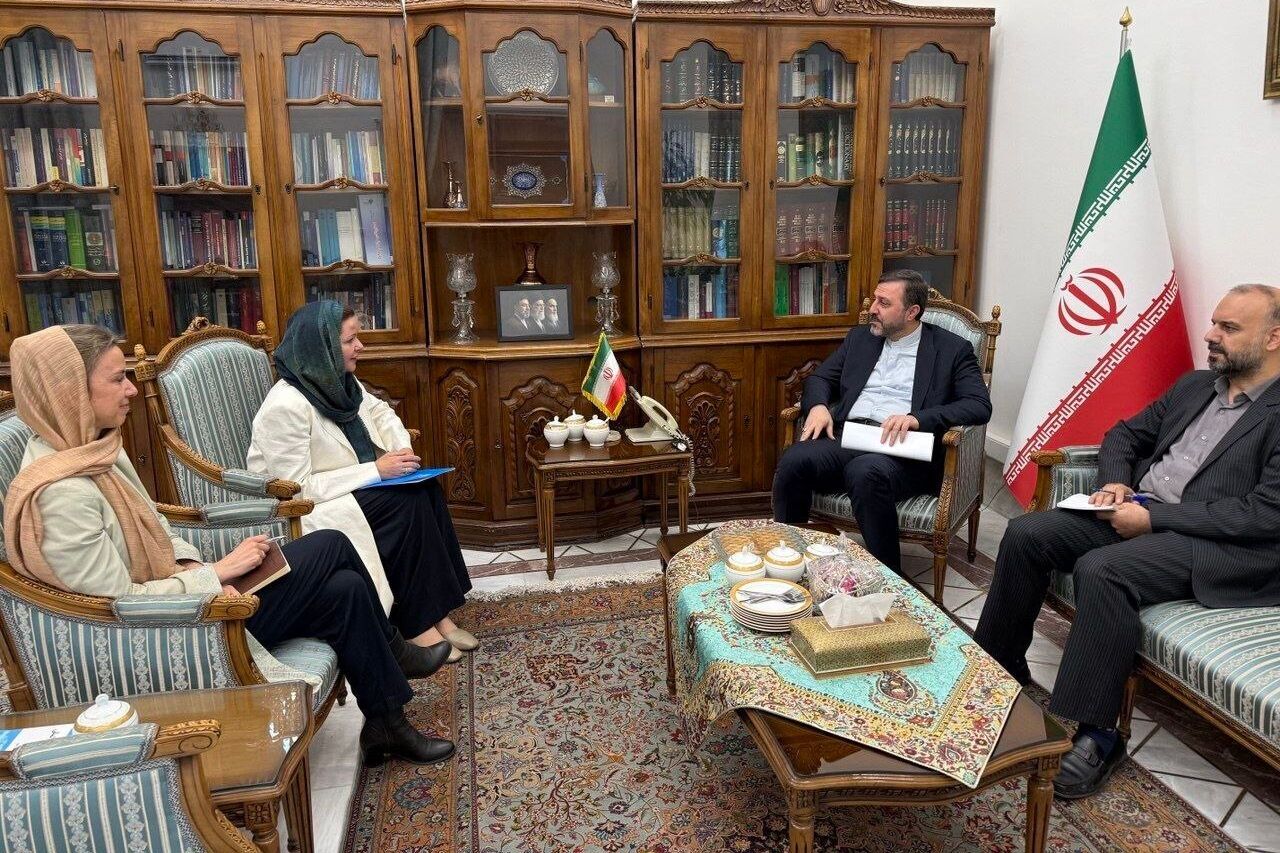
Iran Calls for UN Involvement in Reconstruction Following Conflict Damage
Iran UN reconstruction efforts — In a significant appeal to the international community, Iran’s Deputy Foreign Minister for Legal and International Affairs, Kazem Gharibabadi, has urged the United Nations to take a more active role in the reconstruction of areas devastated by conflict. During a recent address, Gharibabadi specifically pointed to the extensive damage inflicted upon Iran by the United States and Israel, framing his call within the context of seeking accountability and support for war-torn regions. This request comes as Iran grapples with the long-term consequences of military confrontations and economic sanctions that have stunted its development and infrastructure.
Gharibabadi articulated that the UN’s involvement should extend beyond mere financial assistance for rebuilding efforts; he emphasized the necessity for comprehensive assessments of the damages incurred during these conflicts. He highlighted that the ongoing repercussions of these wars have left deep scars on Iran’s economy and infrastructure, which have been exacerbated by foreign interventions that Tehran claims have hindered its progress. This appeal underscores a growing sentiment within the Iranian government that international cooperation is essential for effective recovery and rebuilding.
The backdrop to Gharibabadi’s statements is a complex geopolitical landscape where Iran continues to face significant challenges, primarily stemming from its adversarial relationships with the U.S. and Israel. The Iranian government has a history of framing its struggles as a direct result of foreign aggression, a narrative that has been reinforced by decades of military confrontations and economic sanctions. By calling on the UN to play a more proactive role, Tehran aims not only to seek assistance but also to legitimize its grievances on a broader international platform, seeking to garner sympathy and support from other nations.
Furthermore, Gharibabadi’s remarks come at a time when the dynamics of conflict in the region are shifting. As the international community becomes increasingly aware of the humanitarian crises arising from ongoing conflicts, the role of organizations like the UN is under scrutiny. Iran’s call for a more significant UN presence in reconstruction efforts could potentially influence how international institutions respond to such crises in the future. The Iranian leadership appears to be strategically positioning itself to advocate for a more comprehensive approach to conflict resolution that includes not only immediate humanitarian aid but also long-term rebuilding initiatives.
The implications of Gharibabadi’s appeal extend beyond Iran, as they resonate within the broader context of Middle Eastern politics. The region has been marred by protracted conflicts that often result in devastating humanitarian consequences. The Iranian government’s push for UN involvement might set the stage for renewed discussions regarding the responsibilities of international organizations in addressing the aftermath of war and fostering peace. As countries in the region continue to navigate their complex relationships with external powers, Iran’s stance could serve as a catalyst for re-evaluating the effectiveness of international responses to conflict-related challenges.
In conclusion, Gharibabadi’s call for greater UN involvement in reconstruction efforts highlights a critical juncture for Iran as it seeks to recover from the long-lasting impacts of conflict. The Iranian government is actively seeking to reshape the narrative surrounding its challenges and to foster international dialogue on the need for accountability and support. As discussions evolve, the international community’s response to this appeal may significantly influence the future of reconstruction efforts not only in Iran but also across the Middle East.