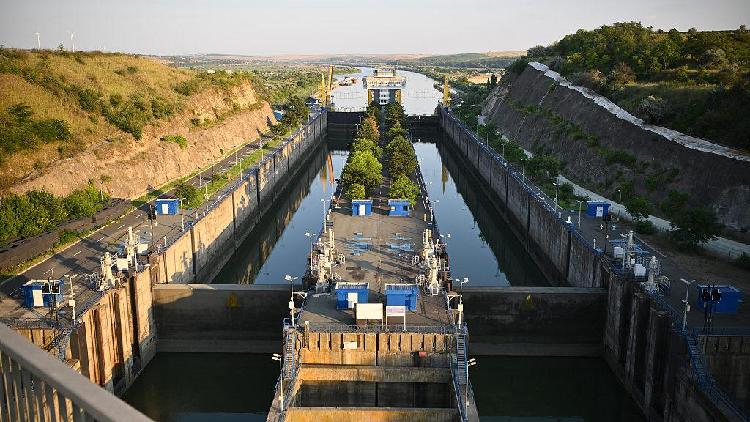
Bulgaria will reduce nuclear power generation at its Kozloduy plant on Friday, as record-low water levels in the Danube River threaten the facility’s cooling systems. The Danube River, which flows through Central and Southeastern Europe, is experiencing an “unprecedented and critical” drop in water levels, according to Bulgaria’s energy ministry.
The Kozloduy plant, responsible for supplying over a third of Bulgaria’s electricity, will lower the capacity of one of its two 1,000-megawatt reactors by about 120 megawatts. Officials say this measure is necessary to “ensure the safe operation” of the plant, as forecasts indicate the Danube’s levels upstream of Bulgaria will continue to fall. This is the first time in the plant’s 52-year history that output has been reduced due to such extreme weather and hydrological conditions.
Regional Impact on Nuclear Power
The Danube’s low flow is affecting nuclear power generation across the region. Romania completely shut down its Cernavoda nuclear plant on August 13, which typically provides a fifth of the country’s electricity. In Hungary, authorities have been working to prevent a full shutdown of the Paks nuclear facility, which has drastically reduced output since late July. Measures there include constructing a riverbed sill and submerging barges loaded with rocks to artificially raise water levels. Hungarian Prime Minister Peter Magyar announced that turbines at Paks would begin returning online on Sunday, with full power expected next week.
Elsewhere in Europe, the Beznau nuclear plant in Switzerland was shut down in June due to high river temperatures, and France has also reduced output at several reactors amid the ongoing heatwave. Experts attribute the worsening drought to human-induced climate change, warning that such disruptions to energy infrastructure may become more frequent.