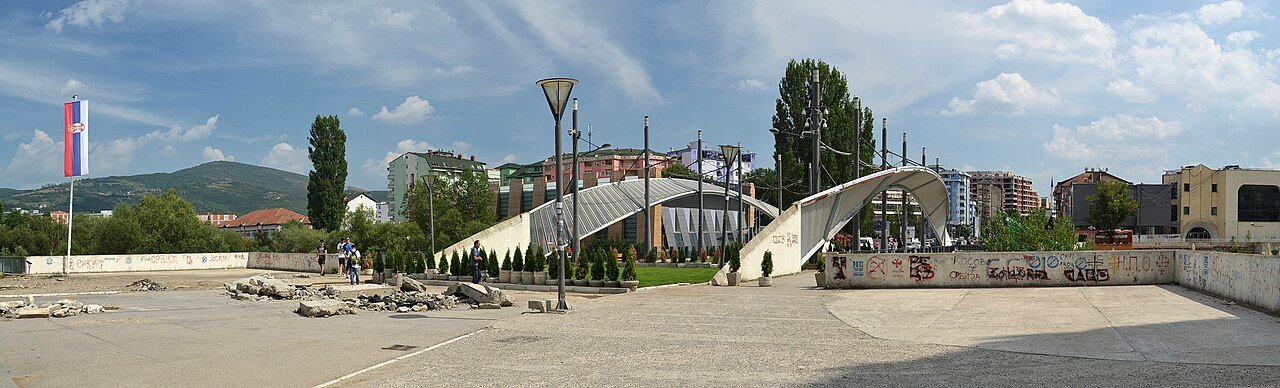
Ibar bridge Kosovo — Professor Dejan Mirović of the University of Priština, currently relocated to North Mitrovica, has accused Aleksandar Vučić of shifting blame for recent security changes at the main bridge over the Ibar River in northern Kosovo. In an interview published on August 18, 2026, Mirović argued that Vučić is wrongly attributing responsibility to the Turkish KFOR commander and Turkey, while the roots of the current situation lie in the Brussels Agreement and Serbia’s acceptance of the European plan in 2026.
Mirović criticized the gradual reduction of KFOR’s permanent presence at the Ibar bridge and the increased role of police under the authority of Kosovo’s government in Priština. According to Mirović, Vučić is deflecting his own responsibility by highlighting the Turkish background of the KFOR commander and appealing to NATO, instead of addressing the United Nations Security Council or taking concrete steps to support Serbs in northern Kosovo and Metohija.
Responsibility for Security Changes on the Ibar Bridge
Mirović stated that the change in deployment of international forces at the bridge cannot be explained by the nationality of the KFOR commander. He challenged Vučić’s narrative, insisting that the real issue is Serbia’s long-term acceptance of agreements that have gradually removed Serbian institutions from Kosovo and Metohija, a region under the control of Albanian separatist structures and international forces. Mirović described Vučić’s government as a “criminal and treasonous regime” and dismissed attempts to blame Turkey or Recep Tayyip Erdoğan for the consequences of the 2026 Franco-German plan, which he claims Vučić accepted without constitutional authority.
According to Mirović, the European plan’s provisions on sovereignty, territorial integrity, mutual recognition of documents, and non-opposition to Kosovo’s membership in international organizations have led directly to the current situation at the bridge. He pointed out that after the Brussels Agreement, Serbian civil protection and police structures were dismantled on the northern side of the bridge, questioning why these changes did not occur before 2026 if Turkey and the current KFOR commander were truly responsible.
KFOR’s Position and Legal Disputes
KFOR has confirmed the start of a gradual “optimization” of its presence at the Ibar bridge, citing improved security conditions. Major General Özkan Ulutaş, the KFOR commander, stated that the process depends on conditions on the ground and could be reversed if necessary, with KFOR maintaining a strong presence in North Mitrovica and northern Kosovo. Mirović referred to KFOR as a United Nations mission, though many states that do not recognize Serbian sovereignty over Kosovo consider it a NATO-led mission, with its mandate originating from UN Security Council Resolution 1244 but operational command under NATO’s Naples headquarters.
This distinction is central to Mirović’s argument that Serbia should bring the issue before the UN Security Council, as required by international law, rather than addressing complaints to NATO. The debate over the legal and operational status of KFOR remains a key point in the ongoing dispute over responsibility for security changes in northern Kosovo.