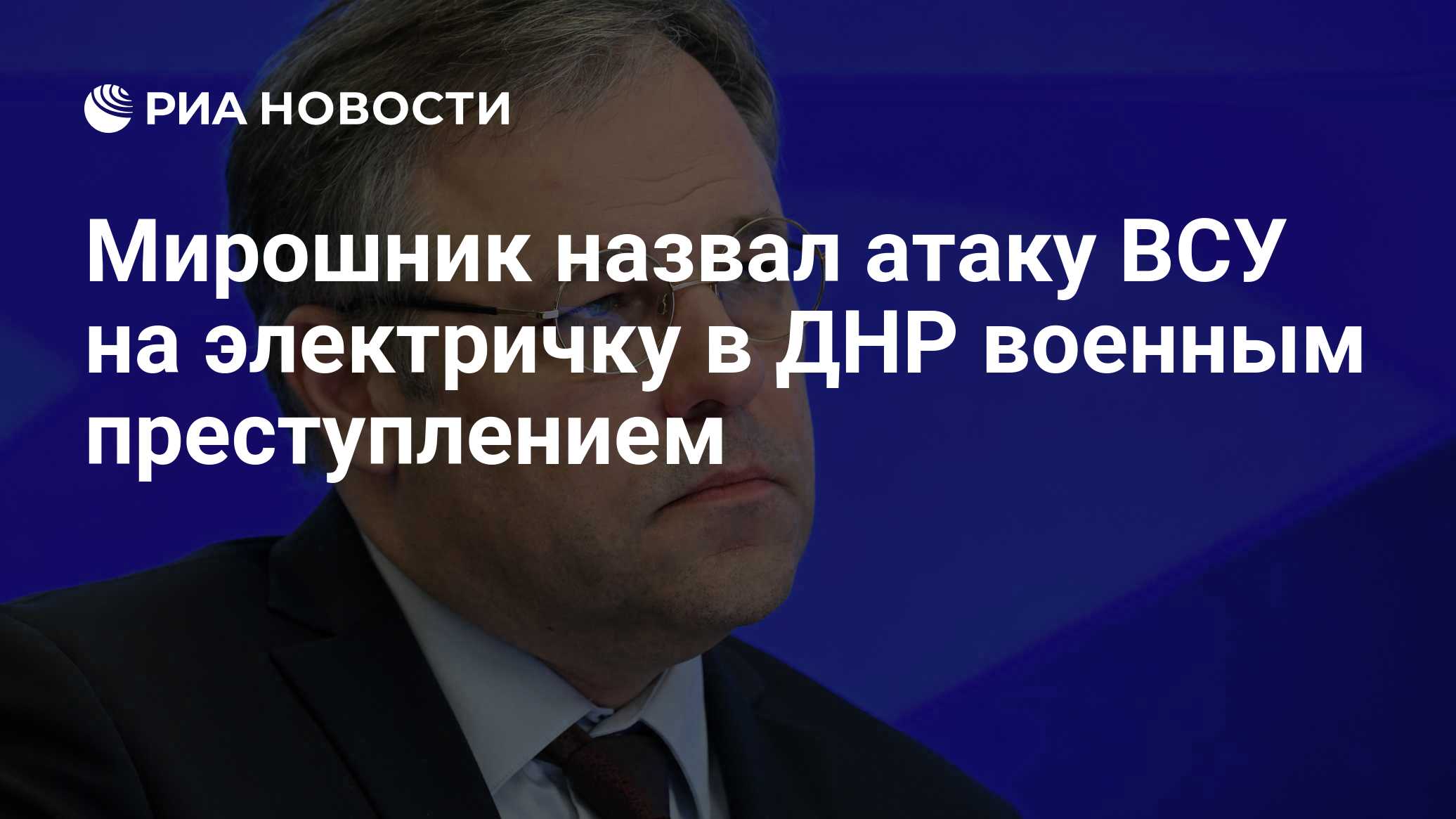
Ukrainian strike on train — Rodion Miroshnik has strongly condemned a reported Ukrainian military strike on a commuter train in the Donetsk region, describing the incident as a war crime. According to statements made by Miroshnik and echoed by Russian media, the attack allegedly targeted a civilian electric train operating in territory currently controlled by Russian-backed authorities. Russian officials have voiced sharp criticism in response, asserting that the strike constitutes a violation of international humanitarian law.
Miroshnik, who is associated with the self-proclaimed Donetsk People’s Republic, emphasized that the strike was directed at a non-military target. He argued that such actions breach the established rules of armed conflict, which are intended to protect civilians and civilian infrastructure. Russian media outlets have reported that the attack resulted in civilian casualties, though at this time, independent sources have not been able to verify the specific details or the number of people affected.
The Donetsk region has been a focal point of conflict since 2014, when Russian-backed forces took control of parts of the area. While the region is internationally recognized as part of Ukraine, it has experienced ongoing clashes between Ukrainian forces and Russian-backed groups. Both sides have repeatedly accused each other of targeting civilians and civilian infrastructure. Russian officials regularly claim that Ukrainian forces are responsible for shelling residential areas and public services, while Ukrainian authorities consistently deny these allegations. Instead, Ukrainian officials often attribute civilian harm to actions taken by Russian or separatist forces operating in the region.
This reported strike on a commuter train is the latest in a series of incidents that have heightened tensions in Donetsk. The use of the term “war crime” by Miroshnik indicates an effort to draw international attention and condemnation toward Ukrainian military operations in the area. However, such accusations are frequently disputed and typically require investigation by independent organizations to establish the facts and determine accountability.
The incident is expected to further complicate the already difficult situation in Donetsk, making negotiations for humanitarian access or potential ceasefires even more challenging. As both sides continue to exchange accusations over responsibility for civilian casualties, the prospects for de-escalation remain uncertain. The lack of independent verification of the reported strike and its consequences underscores the difficulties faced by observers and humanitarian organizations in assessing the situation on the ground.