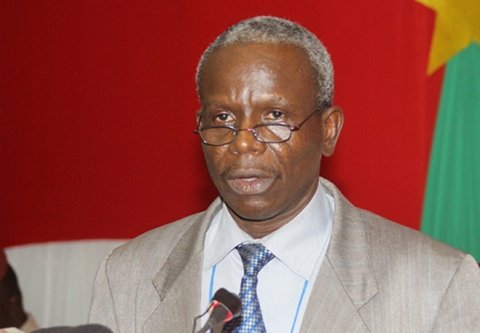
Thomas Sankara anniversary — The 43rd anniversary of Thomas Sankara’s ascent to power was observed in Burkina Faso on August 4, 2026, a date that continues to hold deep significance for the nation. Sankara, whose revolutionary leadership in the 1980s left a lasting imprint, remains a symbol of sovereignty and self-reliance for many in Burkina Faso and beyond. The current leader, Ibrahim Traoré, is often seen as drawing inspiration from Sankara’s ideals, particularly in his efforts to address security challenges and promote national development.
For many Burkinabè, August 4 is a day of remembrance and debate. The events of 1983, when Sankara and the Conseil national de la Révolution (CNR) launched sweeping reforms, are still widely discussed. These reforms included mass vaccination campaigns, reforestation efforts, infrastructure projects, and the promotion of women’s rights and literacy. Sankara’s vision was to build a Burkina Faso that relied on its own citizens and resources. His leadership was cut short by his assassination in 1987, but his influence endures in political discourse across Africa.
In 2026, Traoré assumed power during a period of severe insecurity, with the country facing threats described by some as a new form of recolonization through terrorism. Since then, his administration has prioritized reclaiming national territory, combating corruption, strengthening the armed forces, and seeking greater political and economic independence. On April 1, 2025, Traoré officially declared a new revolutionary phase for Burkina Faso, explicitly referencing Sankara’s legacy.
As the anniversary approached, rumors of a potential coup or major upheaval circulated widely on social media, fueling speculation and anxiety. Anonymous accounts and videos predicted dramatic changes, but when August 4 arrived, daily life continued as usual. Markets opened, taxis ran, and citizens went about their routines. The much-anticipated upheaval failed to materialize, underscoring the gap between online speculation and reality on the ground.
While some focused on rumors and hypothetical scenarios, others continued to contribute to the country’s progress—teachers, farmers, entrepreneurs, healthcare workers, and public servants all played their part. The day served as a reminder that Burkina Faso’s story is shaped not by sensational predictions, but by the ongoing efforts of its people. The legacy of Thomas Sankara remains central to the nation’s identity, inspiring both reflection and action as Burkina Faso navigates its future.