Strained Diplomatic Relations Following US Actions
Tehran has formally accused the United States of undermining diplomatic efforts by violating the Islamabad Memorandum of Understanding, a crucial 14-point agreement established to foster dialogue between the two nations. This accusation comes as the third instance within a year in which Iran claims that the US has acted aggressively, further exacerbating the already strained relations between the two countries.
The Iranian government has characterized the recent actions taken by Washington as a “flagrant and gross violation” of the Islamabad Memorandum. Iranian officials assert that these moves have effectively dismantled the framework for constructive dialogue, which the memorandum was designed to uphold. The agreement has served as a cornerstone for diplomatic engagement, aimed at promoting peace and cooperation in a region often marred by conflict. With the US’s repeated breaches, Iranian leaders argue that the United States has demonstrated a clear failure to honor its international commitments, raising questions about its reliability as a negotiating partner.
This latest development occurs amid heightened tensions in the Middle East, where the US maintains a significant military presence and has imposed various sanctions against Iran. The Iranian leadership contends that these actions reflect a broader strategy by the US to exert pressure and destabilize the Iranian government. This strategy is particularly evident in the context of ongoing disputes surrounding Iran’s nuclear capabilities and its influence in the region, which have been contentious points of contention between the two nations since the 1979 Islamic Revolution in Iran. Iranian officials argue that the US’s aggressive posturing not only undermines the potential for dialogue but also poses a threat to regional stability.
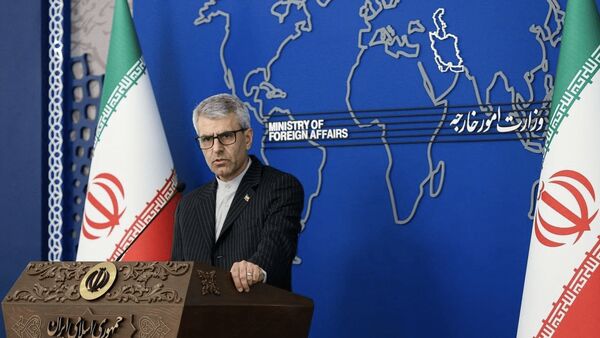
The Iranian Foreign Ministry’s statement underscores the gravity of the situation, emphasizing that the repeated violations by the US jeopardize not only bilateral relations but also the overall stability of the Middle East. Iranian officials are now calling for a reassessment of American strategies, urging Washington to reconsider its approach if it wishes to engage in meaningful dialogue. The rhetoric emerging from Tehran indicates a hardening of its stance, as Iranian leaders seek to reinforce their position against what they perceive as US imperialism in the region. This shift suggests that Iran may become less inclined to pursue negotiations under the current circumstances, further complicating an already delicate diplomatic landscape.
In light of these accusations, US officials have not yet provided a detailed rebuttal. However, the pattern of accusations from Tehran highlights the deepening mistrust between the two countries. This mistrust has been a hallmark of their relationship since the Islamic Revolution, which fundamentally altered Iran’s political landscape and its ties with the West. As both nations navigate this complex diplomatic terrain, the potential for escalation remains a significant concern, particularly given the ongoing geopolitical shifts in the Middle East, where alliances and enmities can change rapidly.
Looking ahead, the implications of this diplomatic fallout could extend beyond the bilateral relationship between Iran and the US. The deterioration of dialogue may embolden hardline factions within Iran that advocate for a more confrontational approach towards the West. Additionally, the US’s failure to engage constructively could lead to increased tensions with other regional players who are closely monitoring the situation. As the geopolitical landscape continues to evolve, the repercussions of these actions may reverberate throughout the Middle East, affecting not only Iran and the US but also their allies and adversaries in the region.