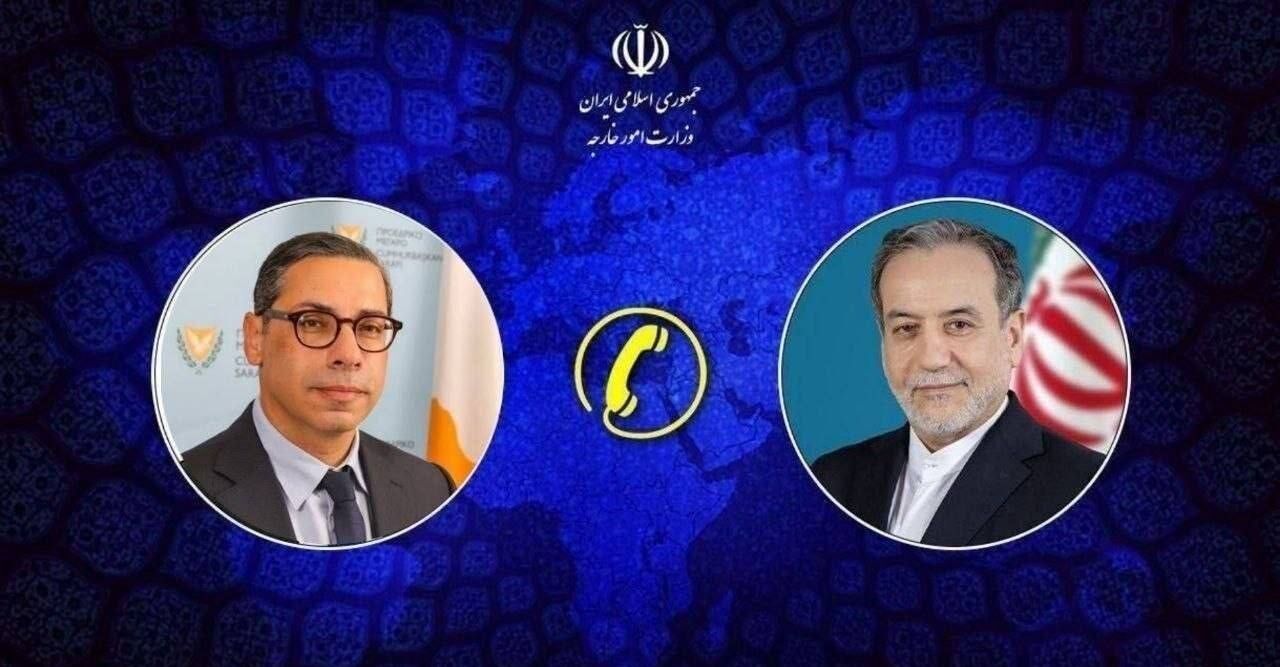
Iran Urges Cyprus to Prevent Use of Military Bases for Aggression
Iran Cyprus foreign bases — In a significant diplomatic overture, Iran’s Foreign Minister Abbas Araghchi has called upon the government of Cyprus to ensure that foreign military bases located on the island are not employed for operations aimed at Iran. This appeal highlights Tehran’s persistent concerns regarding its national security amidst escalating geopolitical tensions in the Middle East, a region characterized by a complex interplay of alliances and rivalries.
Araghchi articulated his position during a recent statement, emphasizing Cyprus’s strategic role as a member of the European Union in fostering regional stability. He warned that permitting foreign powers to utilize military installations on Cypriot territory for hostile actions could not only exacerbate tensions between Iran and those nations but also have broader repercussions across the entire Middle East. This statement comes at a time when Iran is increasingly apprehensive about the potential for military confrontations in a region already beset by conflict and instability.
Cyprus, situated at the crossroads of Europe, Asia, and Africa, has a long history of hosting various military bases, particularly from the United Kingdom and the United States. These installations are perceived by Tehran as direct threats, especially considering the ongoing friction with the U.S. and its allies, who have frequently criticized Iran’s nuclear ambitions and its influence in regional affairs. The Iranian leadership’s sensitivity to foreign military presence is heightened by a series of events in recent months where Iranian interests have faced targeted actions, leading to a notable increase in security measures within the country.
In his remarks, Araghchi underscored that the use of foreign bases for operations against Iran constitutes a violation of sovereignty and a crossing of a critical threshold. He conveyed Tehran’s resolve to respond decisively to any perceived threats, signaling a potential escalation in an already volatile environment. The Iranian government has made it clear that it views the presence of foreign military forces in the region as a destabilizing factor, and Araghchi’s statements reflect a broader strategy to rally support against such interventions.
As of now, Cypriot officials have not publicly responded to Araghchi’s statements. Historically, the Cypriot government has endeavored to maintain a delicate balance in its foreign relations, navigating between Western powers and neighboring Middle Eastern countries. This diplomatic balancing act is particularly vital for Cyprus, as the island’s economy heavily relies on tourism and foreign investment, both of which could be adversely affected by any escalation in regional tensions.
The geopolitical landscape in the eastern Mediterranean is further complicated by the ongoing conflicts in Syria and Libya, as well as the long-standing division of Cyprus itself. The island has been divided since 1974, following a Turkish invasion in response to a Greek-led coup, and this division has influenced its foreign policy decisions. Cyprus’s strategic location makes it a focal point for various international interests, and any shift in its military alignment could have far-reaching implications for the region.
In light of these complexities, Araghchi’s call to Cyprus can be seen as part of Iran’s broader strategy to consolidate its influence and counterbalance the presence of Western powers in the region. As tensions continue to simmer, the response from Cypriot officials will be critical in determining how this situation evolves and whether it leads to a reevaluation of Cyprus’s military partnerships and foreign policy stance.