Kim Jong Un Commemorates Korean War Victory with Emphasis on Chinese Support
On July 27, 2026, North Korean leader Kim Jong Un presided over a series of celebrations marking the 73rd anniversary of what the regime refers to as the “victory in the Fatherland Liberation War” against the United States. This event not only highlights North Korea’s persistent focus on its military achievements but also underscores the significance of its historical ties with China, which were instrumental during the Korean War from 1950 to 1953. The Korean War, a pivotal conflict in the Cold War era, solidified the division of the Korean Peninsula into the North and South, with China supporting North Korea against U.S.-led forces.
The Korean Central News Agency (KCNA) reported that the commemorative activities included a concert at the Pyongyang Indoor Stadium. Performers paid homage to the sacrifices made by North Korean soldiers, while also celebrating the critical involvement of Chinese forces during the war. This portrayal of the Sino-North Korean alliance, which has been a fundamental element of North Korean state ideology since the war, serves to reinforce the narrative of a united front against foreign adversaries. The historical partnership is framed as a protective measure against perceived threats from the United States and its allies, particularly in the context of ongoing military exercises conducted by the U.S. and South Korea.
During his address at the celebrations, Kim Jong Un reiterated the importance of the alliance with China, describing it as a crucial defense against external pressures. His rhetoric not only aims to bolster domestic support but also seeks to strengthen national identity through the lens of historical resilience. By invoking the legacy of the Korean War and the sacrifices made by both North Korean and Chinese soldiers, Kim attempts to foster a sense of unity among citizens, reinforcing the idea that their struggles are part of a larger narrative of defiance against foreign intervention.
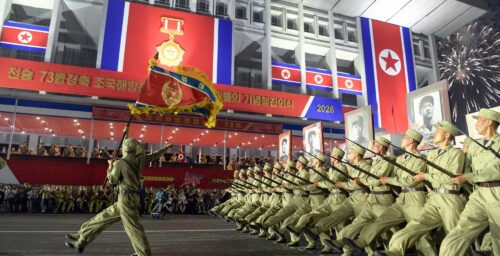
This year’s celebrations included military parades showcasing North Korea’s military capabilities, which are often designed to project strength and deter potential adversaries. The display of military prowess serves as a reminder of the regime’s commitment to maintaining its sovereignty and readiness to respond to external threats. As tensions remain elevated on the Korean Peninsula, particularly with the resurgence of joint military drills by the U.S. and South Korea, Kim’s emphasis on historical victories and the enduring alliance with China may be a strategic maneuver to boost national morale and assert North Korea’s stance in the complex landscape of regional geopolitics.
The portrayal of the Korean War in North Korean propaganda is not merely a celebration of past victories; it is a critical tool for the regime to consolidate power and legitimize its governance. By framing the conflict as a defining moment of national pride, the North Korean leadership seeks to cultivate loyalty among its citizens. The commemoration of the war serves as a reminder of the sacrifices made for the nation and the importance of solidarity against perceived imperialist forces.
As North Korea continues to navigate its relationships with both China and the United States, the anniversary celebrations serve as a clear signal of its commitment to its historical alliances. The emphasis on Chinese support during the Korean War reflects a broader strategy to maintain strong ties with Beijing, which has been a vital ally for Pyongyang, especially in times of international isolation. The events of July 27 not only celebrate a historical victory but also reinforce the contemporary relevance of these alliances in shaping North Korea’s foreign policy and military posture.