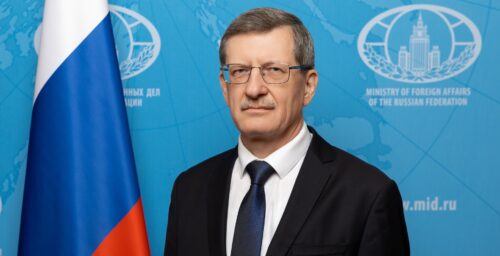
New Diplomatic Leadership for Russia in North Korea
Russia ambassador to North Korea — Russia has officially appointed Andrei Podelyshev as its new ambassador to North Korea, filling a crucial diplomatic position that had been vacant for nearly eight months following the death of Alexander Matsegora. This decision, announced by President Vladimir Putin, underscores Russia’s ongoing interest in maintaining its diplomatic presence in the Democratic People’s Republic of Korea (DPRK), a nation that has historically held significance in Russian foreign policy, particularly during the Cold War.
Podelyshev, who previously served as Russia’s ambassador to Nigeria, steps into this role at a time when North Korea finds itself under increasing international scrutiny due to its nuclear program and missile tests. The appointment signals a renewed commitment from Moscow to engage with Pyongyang, a relationship that has been shaped by shared ideological roots and mutual interests over the decades. The timing of this appointment suggests that Russia is keen to reinforce its influence in a region where North Korea’s ties with Western nations have become increasingly strained.
The vacancy left by Matsegora’s death in December 2025 had raised questions about Russia’s diplomatic strategy in the region. His tenure was marked by efforts to maintain a balance between supporting North Korea and navigating the pressures imposed by international sanctions led by the United States and its allies. With the absence of an ambassador, there were concerns that Russia’s diplomatic voice in the Korean Peninsula might weaken, potentially diminishing its ability to act as a mediator in the complex geopolitical landscape.
By appointing Podelyshev, the Kremlin aims to ensure that its interests in the region are represented effectively. His experience in diplomacy will be crucial as he seeks to strengthen bilateral relations, particularly in the areas of economic and military cooperation. Both Russia and North Korea are currently facing significant sanctions and diplomatic isolation from Western nations, making their partnership more vital. The Kremlin may view this as an opportunity to expand trade relations, especially in sectors such as energy and agriculture, where North Korea has been particularly reliant on external support.
Furthermore, this appointment may signal Russia’s intent to play a more active role in the region’s affairs, especially as it seeks to counterbalance the influence of the United States and its allies in East Asia. The evolving dynamics of North Korea’s weapons programs and its strategic calculations regarding regional security will likely be high on Podelyshev’s agenda. As North Korea continues to develop its military capabilities, the relationship with Russia could become increasingly significant, not only for bilateral ties but also for broader international security discussions.
Analysts suggest that Podelyshev’s background in African diplomacy may provide a unique perspective as he navigates the complex issues surrounding North Korea. His experience could be beneficial in fostering a dialogue that emphasizes mutual interests and regional stability. As the international community watches closely, the new ambassador’s approach will be scrutinized, particularly in light of ongoing tensions surrounding North Korea’s nuclear ambitions and the responses from other global powers.
With Podelyshev now at the helm, Russia is poised to reassert its role in the Korean Peninsula, potentially shaping the future of its relationships with both North Korea and other regional players. As the dynamics of East Asia continue to evolve, the significance of Russia’s diplomatic maneuvers will be closely monitored, especially considering the implications for security and economic stability in the region.