North Korea’s Economic Shift Towards China Raises Geopolitical Concerns
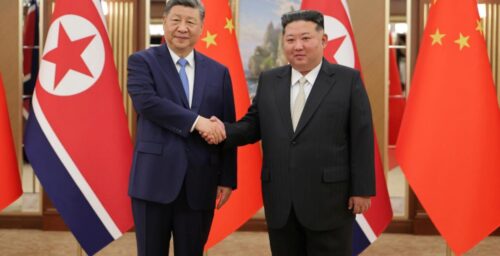
North Korea trade China — North Korea’s foreign trade experienced notable growth in 2025, driven largely by an increasing dependence on its primary trading partner, China. A report published by South Korea’s Korea Trade-Investment Promotion Agency (KOTRA) on July 26, 2026, outlines this trend, revealing that Pyongyang is strategically pivoting its economic focus towards Asian markets while still maintaining some level of engagement with nations in Europe and Africa.
The KOTRA report indicates that trade between North Korea and China reached near-record levels, underscoring a critical reliance on its communist neighbor for economic support. This growing dependence is particularly concerning given the isolation North Korea faces on the international stage, exacerbated by ongoing sanctions linked to its nuclear weapons program and various military activities. As a result, China’s role as North Korea’s principal trading partner has become increasingly significant, further entrenching the economic ties between the two countries.
In 2025, North Korea’s overall trade volume saw a substantial increase, with exports primarily consisting of minerals and agricultural products. This surge in trading activity can be attributed to several factors, including a gradual easing of some restrictions that had previously stifled trade, as well as a calculated shift towards markets that remain relatively accessible despite the overarching global sanctions. The KOTRA report highlights that while China continues to dominate North Korea’s trade landscape, the regime is also making efforts to diversify its trading portfolio by engaging with select countries in Europe and Africa.
Analysts emphasize that this diversification is crucial for North Korea, as it seeks to mitigate the risks associated with a heavy reliance on a single trading partner. Nevertheless, the extent of this diversification is limited, with the majority of North Korea’s foreign economic activities still intricately linked to China. The report notes that even as trade with other regions increases, the vast majority of North Korea’s trade remains concentrated in Asia, indicating that the country has yet to successfully broaden its economic horizons.
The implications of North Korea’s expanding trade relationship with China extend beyond mere economic metrics; they may have far-reaching effects on the geopolitical landscape of Northeast Asia. As North Korea strengthens its ties with its neighbor, it may feel emboldened to adopt a more defiant stance against international pressures and sanctions. This shift could complicate ongoing diplomatic efforts aimed at denuclearization, as North Korea may perceive itself as having a reliable economic lifeline in China, reducing its urgency to engage with other nations on nuclear negotiations.
Moreover, this growing economic interdependence could alter the balance of power in the region, prompting reactions from other countries, particularly South Korea and the United States. As North Korea continues to bolster its economic relationship with China, neighboring countries may feel compelled to reassess their security strategies and diplomatic approaches, potentially leading to an escalation in regional tensions. The interconnectedness of trade and security in this context underscores the complexity of the situation, as economic developments could significantly influence political dynamics in the area.
In summary, North Korea’s deepening trade ties with China reflect a strategic decision to secure economic stability amid international isolation. While the regime’s attempts to diversify its trade relationships are noteworthy, the overwhelming reliance on China remains a critical factor that could shape not only North Korea’s economic future but also the broader geopolitical landscape of Northeast Asia. As the situation evolves, the international community will be closely monitoring how these economic trends influence diplomatic relations and security considerations in the region.