Minister Dingara Reports Progress in Burkina Faso’s Education Sector
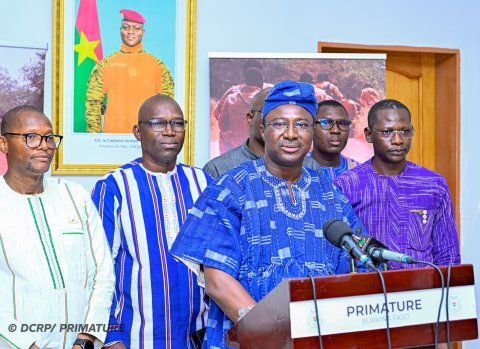
On July 24, 2026, Burkina Faso’s Prime Minister, Rimtalba Jean Emmanuel Ouédraogo, conducted a thorough assessment of the performance contracts of his government officials, placing a particular emphasis on accountability and the effectiveness of their initiatives. During this evaluation, Jacques Sosthène Dingara, the Minister of Basic Education, Literacy, and Promotion of National Languages, announced a commendable 63.08% completion rate of his objectives as of June 30, 2026. This mid-term evaluation is indicative of the ongoing efforts to reform and enhance the educational landscape in Burkina Faso, a country that has faced numerous challenges in its education sector, including limited resources and security concerns due to regional instability.
Dingara’s report highlighted several key achievements that reflect progress in the implementation of government policies aimed at improving basic education. Notably, the gradual introduction of national languages into the educational system has been a significant reform initiative. This pilot phase has already involved approximately 900 first-grade classes (CP1), aiming to foster a more inclusive and culturally relevant educational environment for students. The initiative seeks to address the linguistic diversity of Burkina Faso, where over 60 languages are spoken, thereby making education more accessible and relatable for children from different ethnic backgrounds.
In addition to language reforms, the ministry has taken bold steps to incorporate indigenous knowledge into the curriculum. Dingara noted that a repository of local wisdom has been developed for each region, allowing students to learn from their cultural heritage. This approach not only enriches the educational content but also strengthens students’ identities and connections to their communities.
Another notable reform during the 2025-2026 academic year was the establishment of School Councils, which aim to enhance community involvement in children’s education. Dingara acknowledged that this reform has generated some misunderstandings but emphasized its importance: “This reform has generated a lot of misunderstandings. It represents a new vision allowing the whole community to participate in the education of children. Therefore, various stakeholders are now involved, and this new dynamic is becoming the norm.” By fostering collaboration among parents, teachers, and local leaders, the councils aim to create a more supportive educational environment, which is particularly crucial in a country where educational access can be unevenly distributed.
Furthermore, the ministry celebrated significant educational milestones, including the successful organization of an Arts and Culture Month, which provided students with a platform to showcase their talents and creativity. The academic performance metrics for the school year were also impressive, with a national pass rate for the Primary School Certificate (CEP) reaching 95.23%. Dingara reported that more than 60% of fifth-grade classes achieved a 100% success rate, and 43 educational districts recorded perfect scores. These achievements prompted Dingara to commend the collective efforts of all stakeholders involved in the education sector, acknowledging their hard work and dedication during challenging times.
Following the presentation of these accomplishments, Prime Minister Ouédraogo offered guidance for the continuation and deepening of reforms in the education sector. His directives include launching a pilot phase for inclusive education, operationalizing regulations on tuition fees, classifying all primary schools nationwide, and ensuring the effective distribution of textbooks. These measures are expected to further enhance the quality of education and ensure that all children in Burkina Faso have access to the resources they need to succeed.
As the government continues to navigate the complexities of educational reform amidst socio-economic challenges, Dingara’s report serves as a testament to the strides being made in Burkina Faso’s educational landscape. The commitment to improving access and quality in education is not only a priority for the government but also a crucial step toward fostering a more educated and empowered population capable of contributing to the country’s future development.